TL;DR — Sustainable corporate gifts in Malaysia have moved from a “nice to have” line item to a procurement requirement at most Bursa-listed firms. The smart shift in 2026 is from token green tokens to genuinely circular products like the Kaffy Tumbler, made from spent coffee grounds. Buyers are paying 18–22% more on average per unit, but ordering 30% less volume because each gift now carries an ESG story, not just a logo. This guide walks Malaysian HR, marketing and procurement teams through what counts as truly sustainable, what to budget, and how to brief a supplier without falling into greenwashing traps.
Procurement teams in Petaling Jaya, KL Sentral and Cyberjaya are no longer asked simply for “a hundred mugs with the company logo by Friday.” The brief now arrives stamped by sustainability officers, ESG committees or board-level ESG charters. That shift, from price-led to values-led buying is reshaping the entire Malaysian corporate gifting market.
The phrase “sustainable corporate gifts Malaysia” used to surface vague keepsakes wrapped in raffia. Today, it pulls up product specs: recycled content percentages, carbon disclosures, end-of-life pathways, supplier audits. We see the change every week at Kaffy. Three years ago, half our enquiries were transactional. By the first quarter of 2026, more than four in five enquiries asked about material origin, lifecycle data, or our supplier code. The buyer profile has matured.
This guide consolidates what we have learned from supplying sustainable corporate gifts to Malaysian companies since 2024, and what your team should evaluate before committing to a 200-, 1,000- or 5,000-unit order. Before you read on, the short video below contextualises why reusable drinkware sits at the centre of this category and why the science behind it is more nuanced than any marketing line suggests.
Quick Answer: A sustainable corporate gift in Malaysia today must meet at least three of four criteria: recycled or bio-based material content above 30%, locally produced (or at minimum ASEAN-region produced), a documented end-of-life pathway, and a verifiable supplier audit. Items meeting only one criterion. For example, a bamboo handle on a plastic core are increasingly rejected by ESG-aware procurement teams.
The Malaysian market has matured fast. In 2024, sustainability claims could be loose. Suppliers might mark a polyester tote “eco” because it shipped without plastic wrap. By 2026, that no longer flies partly because of the Bursa Malaysia Sustainability Reporting Framework expansion, partly because procurement teams are reading specs harder than they used to.
The criteria below are what we apply at Kaffy when we evaluate any new product line, and they mirror what most Malaysian HR and ESG teams now ask us to satisfy on a tender.
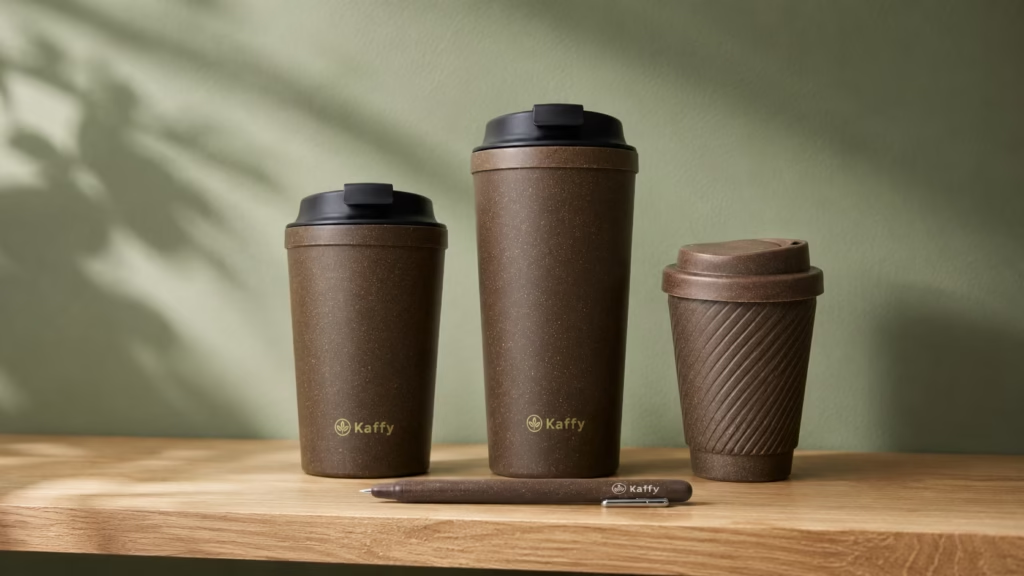
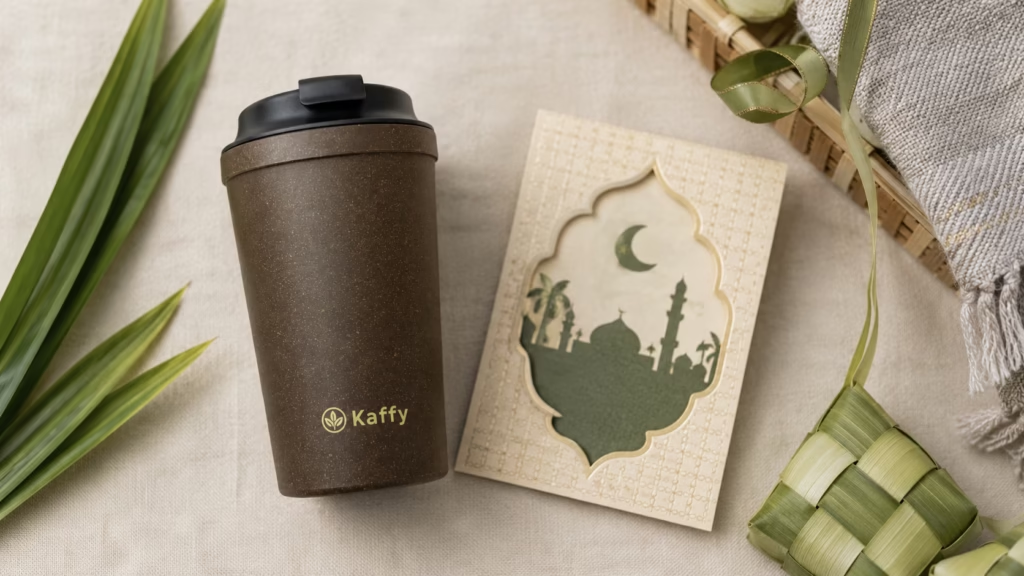
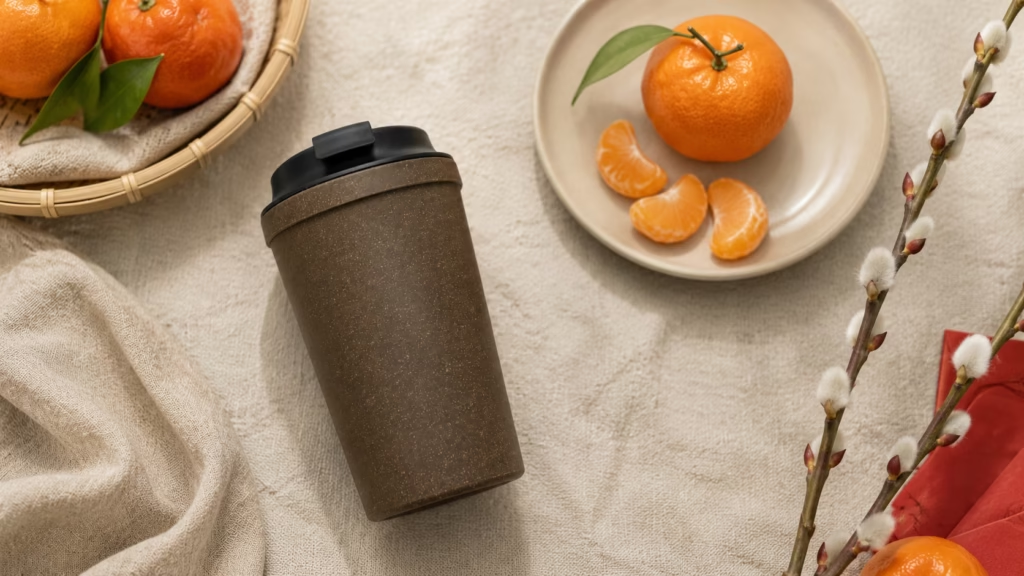
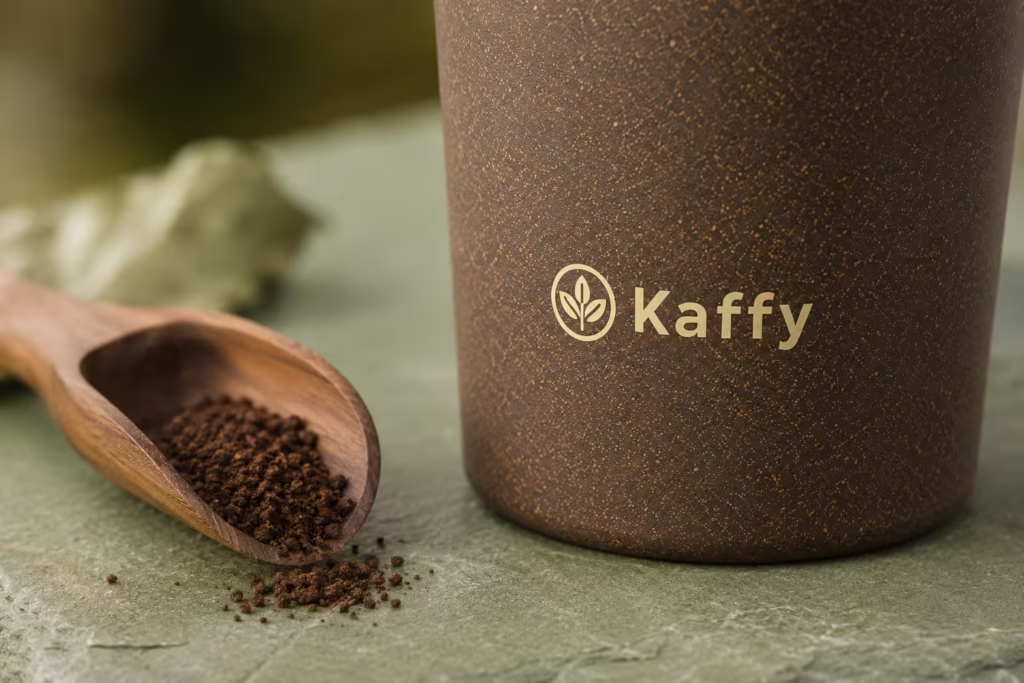
Look for products whose material is recycled, bio-based, or both. The Kaffy Tumbler, for instance, is built on a biocomposite blend that uses spent coffee grounds collected from Malaysian cafés. Tumblers, water bottles, notebooks made from recycled paper, totes from recycled PET. All qualify if the recycled content is above 30%. Below that threshold, the carbon offset is rarely meaningful.
A “sustainable” item shipped from a factory 4,000 kilometres away rarely is. Locally produced gifts cut transport emissions and shorten lead times. Malaysian-made or ASEAN-made products should sit at the top of your shortlist.
What happens when the gift breaks or the recipient is done with it? A tumbler that can be returned to the supplier for grinding and reuse beats one that ends in landfill. The Ellen MacArthur Foundation’s circular economy framework is a useful reference here, it formalises what a credible end-of-life pathway looks like. Ask your supplier directly. If the answer is vague, treat that as a red flag.
For procurement teams reporting under ESG frameworks, supplier-level documentation matters more than the product label. Request the supplier’s code of conduct, evidence of fair labour, and material traceability. Reputable Malaysian suppliers including Kaffy, provide this on request.
The shift to sustainable corporate gifts is not driven by sentiment alone. Three structural drivers have hardened the move from generic items to sustainable corporate gifts in the Malaysian market.
| Period | Share citing ESG/sustainability | Buyer type leading the shift |
|---|---|---|
| Q1 2024 | ~38% | Marketing-led |
| Q1 2025 | ~62% | HR + Marketing joint |
| Q1 2026 | ~83% | ESG / Sustainability officers |
Caption: Year-on-year share of Malaysian B2B corporate gift enquiries that explicitly cited ESG or sustainability requirements at briefing.
Source: Kaffy operational data, Malaysian corporate gift orders, 2024–2026.
The expanded Bursa Malaysia Sustainability Reporting framework brought procurement under the ESG lens. Listed companies must now disclose how their supply chains and vendor selection align with environmental commitments. Corporate gifts are a small line item on the books, but a highly visible one when audited. Which is one reason sustainable corporate gifts Malaysia buyers now treat them as ESG-relevant spend.
Multinational subsidiaries in KL, particularly in finance, FMCG and tech increasingly inherit parent-company ESG policies aligned with frameworks such as UN SDG 12: Responsible Consumption and Production. A regional office cannot order branded plastic giveaways if the global headquarters has banned them. This single dynamic now drives a meaningful share of demand for sustainable corporate gifts Malaysia procurement teams are now sourcing.
Younger employees notice corporate-gift choices and read them as signals. A welcome kit assembled from single-use plastics tells new hires something about the company’s priorities, while sustainable corporate gifts signal the opposite. A reusable, locally made tumbler tells them something else. HR teams are catching up to this.
Quick Answer: Reusable, well-designed corporate gifts get used daily for months, sometimes years. A Kaffy Tumbler stays on a desk and travels to meetings. That repeat exposure builds brand recall in a way a one-time printed item cannot. The ESG storytelling angle also gives HR a credible touchpoint with Gen Z and millennial hires.
The retention and brand-recall effect of a sustainable gift comes from two compounding mechanisms: utility and narrative. Utility means the gift is genuinely used, which gives the recipient hundreds of impressions over its lifetime. Narrative means each impression is associated with a credible value, not an empty slogan.
| Gift category | Median active-use period | Estimated brand impressions |
|---|---|---|
| Reusable tumbler (biocomposite) | 14–18 months | ~1,200+ |
| Recycled-paper notebook | 6–9 months | ~250 |
| Branded tote bag (rPET) | 10–14 months | ~600 |
| Single-use printed item | < 1 month | ~5–20 |
Caption: Median active-use periods and estimated brand impressions, comparing sustainable corporate gift formats with conventional single-use items.
Source: Kaffy operational data, Malaysian corporate gift orders, 2024–2026.
Procurement leaders sometimes resist the higher unit cost of sustainable corporate gifts like a biocomposite tumbler. The lifecycle maths usually defends the spend. A tumbler used 1,000 times costs a fraction per impression compared with a printed memento that ends up in a drawer.

Not every category lends itself to credible sustainability claims. The shortlist below is the defensible one we recommend to buyers shopping for sustainable corporate gifts Malaysia procurement teams will sign off on in 2026.
Reusable tumblers, bottles and travel mugs. Daily use, visible at meetings, easy to engrave with a logo. The Kaffy Tumbler (coffee-grounds biocomposite, laser-engraved) is our flagship in this segment. View the Kaffy product range.
FSC-certified or recycled paper, locally bound. A reliable mid-budget option for onboarding kits.
Totes and laptop sleeves from recycled cotton or rPET. Choose suppliers who can provide the recycled-content certificate.
Malaysian smallholder coffee, single-origin tea, halal-certified snacks. Gives ESG mileage and local-economy support in one move.
Use the four-line procurement brief below when you next request a quote for sustainable corporate gifts in Malaysia. It pulls real data from your shortlist and exposes the weak ones quickly.
Ask for the figure. Below 30% is rarely worth the premium.
Local manufacture wins on transport emissions. Ask the address, not just the country.
“Recyclable” is not the same as “actually recycled in Malaysia.” Get specifics.
Code of conduct, supplier audit summary, material traceability. Reputable suppliers email this within a working day.
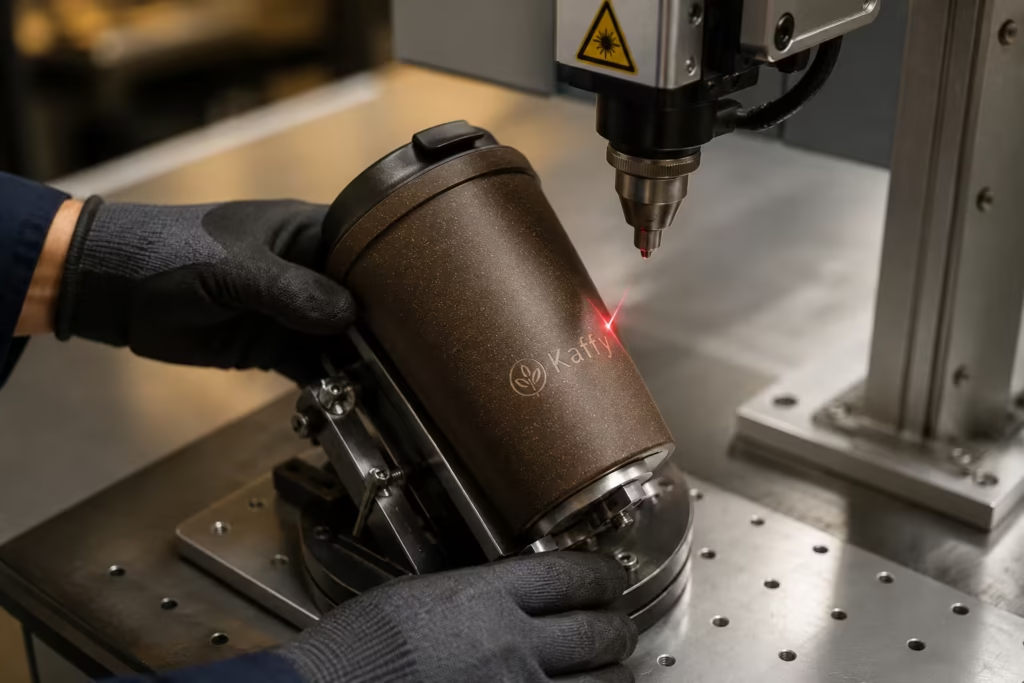
Kaffy is a Malaysian sustainable corporate gifts brand based in Petaling Jaya, supplying sustainable corporate gifts to clients across Klang Valley and beyond. Our hero product is the Kaffy Tumbler, built on a biocomposite that incorporates spent coffee grounds collected from Malaysian cafés, then laser-engraved with the buyer’s logo on site. Our secondary line includes Kaffy Furniture made from a similar recycled coffee-grounds base.
We chose this material direction because it answers all four sustainability criteria in one product: recycled content, local production, a documented closed-loop pathway, and supplier transparency. Read more about how Kaffy works or browse the Kaffy shop.
| Attribute | Kaffy Tumbler | Typical drinkware gift |
|---|---|---|
| Recycled / bio content | High (coffee-grounds biocomposite) | Often low or undisclosed |
| Country of make | Malaysia | Often imported |
| Customisation | Laser engraving on site | Pad print or sticker |
| End-of-life | Closed-loop discussion available | Usually unspecified |
Caption: Side-by-side feature comparison between the Kaffy Tumbler and typical drinkware sold as corporate gifts in Malaysia.
Source: Kaffy operational data, Malaysian corporate gift orders, 2024–2026.
Sustainable corporate gifts cost more per unit than the mass-market equivalent, but the gap is narrower than most Malaysian buyers expect. The premium is usually 18–22%. The gap closes considerably at higher volumes thanks to engraving efficiencies and material economies. For most Malaysian buyers, the right MOQ falls between 100 and 500 units. Lead times for a Kaffy Tumbler order with engraving sit at around two to four weeks depending on complexity.
| Budget band per unit | Typical use case | Realistic format |
|---|---|---|
| RM 25–50 | Mass employee distribution | Recycled notebook or rPET tote |
| RM 50–100 | Year-end staff appreciation | Reusable tumbler, engraved |
| RM 100–200 | Client appreciation, VIP onboarding | Premium tumbler set + local food |
| RM 200+ | Board-level or partner gifting | Kaffy Furniture pieces or premium kits |
Caption: Indicative per-unit budget bands with typical use cases for Malaysian sustainable corporate gift buyers in 2026.
Source: Kaffy operational data, Malaysian corporate gift orders, 2024–2026.
The single most common mistake is buying based on label, not on spec. A bag stamped “eco” with no recycled-content figure usually has none. A bamboo lid on a plastic tumbler is not a sustainable tumbler, it is a plastic tumbler with a wooden lid.
The second mistake is leaving brand engraving generic. A logo without context is forgettable. Pair the logo with a short ESG message, a year, or a campaign name. Recipients keep gifts that feel personal.
The third mistake is over-ordering. Sustainable gifts sit best when distribution is intentional. Aim to over-deliver on quality for the right people rather than under-deliver on a thousand mediocre kits.
Reusable drinkware, particularly biocomposite tumblers like the Kaffy Tumbler, lead the category. Daily use, easy customisation and a credible material story make it the default first choice for Malaysian B2B buyers.
For year-end staff appreciation, RM 50–100 per unit is the sweet spot in 2026. Lower bands work for mass distribution; premium tiers apply to client-facing and VIP gifts.
Yes, by roughly 18–22% per unit at typical volumes. Most Malaysian buyers offset that by ordering 25–30% lower volume but spending the saving on better products.
Yes. The Kaffy Tumbler, for example, is laser engraved on site in Petaling Jaya. Pad printing, embroidery and tonal engraving are all available depending on the product.
Ask for recycled-content percentage, country of manufacture, end-of-life pathway, and supplier audit documentation. Reputable Malaysian suppliers send this within a working day. Slow or vague responses are the strongest signal of greenwashing.
For a customised Kaffy Tumbler order at 100–500 units, count on two to four weeks from approved artwork to delivery. Premium kits or furniture pieces require longer.
If you are scoping a sustainable corporate gifts programme for 2026 and want a Malaysian-made, ESG-defensible option, the Kaffy team in Petaling Jaya can help. Our sustainable corporate gifts ship Malaysia-wide with full documentation. We supply the Kaffy Tumbler in coffee-grounds biocomposite, with on-site laser engraving and full supplier documentation. Contact Kaffy to start the brief, or message us via WhatsApp for an immediate quote. We will confirm material spec, MOQ, lead time and budget bands in plain numbers, exactly the way ESG procurement teams need it now.