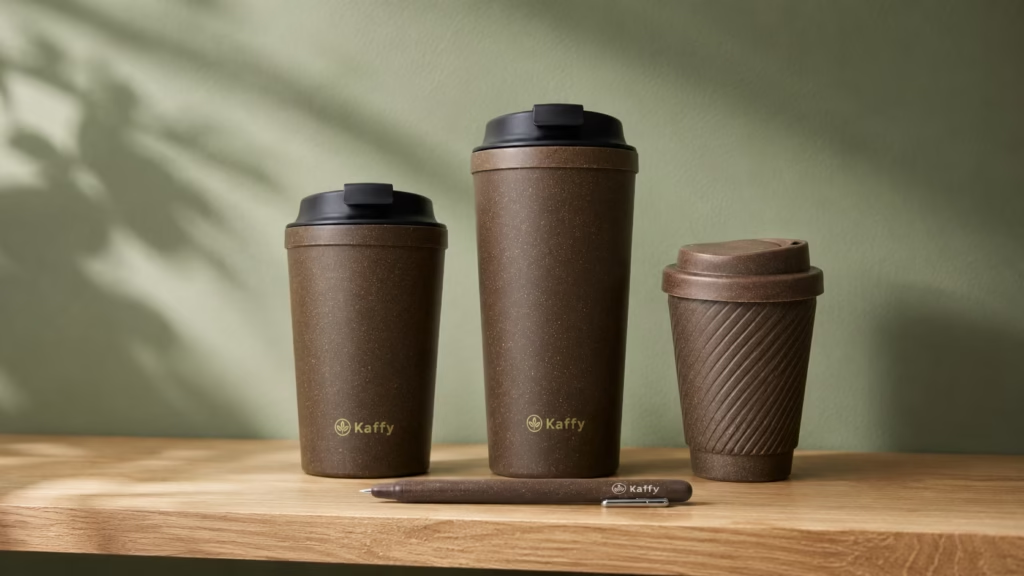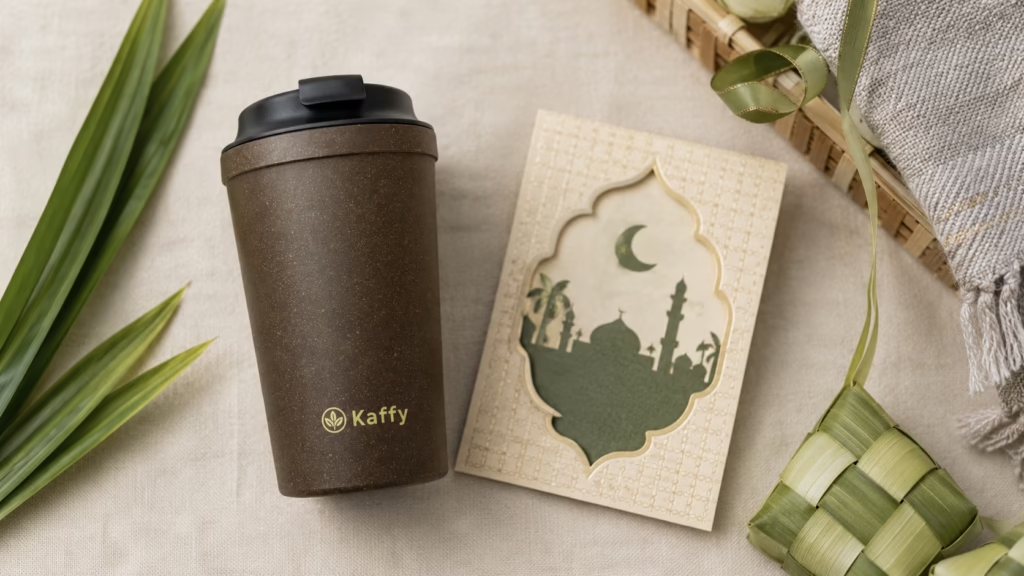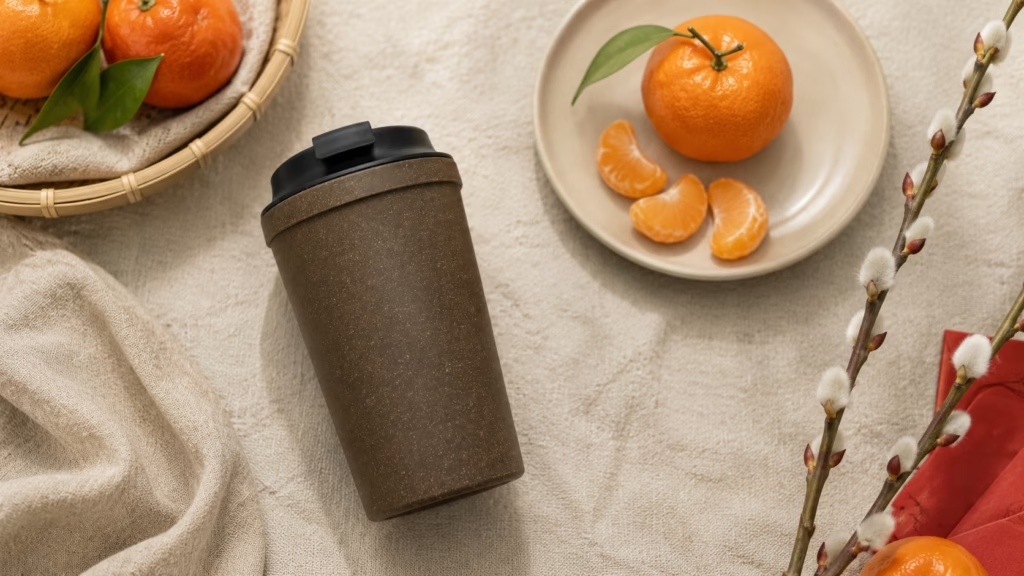
TL;DR — A coffee grounds tumbler Malaysia procurement teams can specify confidently is no longer a lab curiosity, it is a category. The Kaffy Tumbler turns spent coffee grounds collected from Malaysian cafés into a biocomposite drinkware product that takes laser engraving cleanly, lasts 14–18 months in daily use, and gives ESG procurement teams a closed-loop story they can defend in audit. This guide explains the material science in plain terms, where the category sits in 2026, and why a coffee grounds tumbler is the most defensible single corporate gift you can choose right now.
Spent coffee grounds are one of Malaysia’s largest under-recovered F&B waste streams. Cafés generate them by the kilo. Most ends up in landfill. A small but growing share is now diverted into useful materials. And in 2026, the most visible application of that recovery is reusable drinkware. The category is small enough that buyers can name the suppliers; large enough that procurement teams across KL have started specifying it by name.
The Kaffy Tumbler is one of those named products. Built on a coffee-grounds biocomposite, manufactured in Malaysia, laser engraved on site in Petaling Jaya, it embodies a circular-economy story that ESG officers, marketing leads, and HR teams can all use. This article is the brand-product hub, the deeper explainer underneath every other Kaffy blog about drinkware, customisation and sustainable corporate gifts.
Before the spec sections, the short video below shows how cups are made from recycled coffee grinds in practice. It contextualises why this material works and why every coffee grounds tumbler Malaysia buyer encounters in 2026 is part of the same circular-economy story.
Quick Answer: A coffee grounds tumbler is a reusable drinkware product whose body is built on a biocomposite material containing spent coffee grounds, the wet leftover after espresso or filter coffee is brewed. The grounds are dried, blended with food-safe binders, and shaped into the tumbler form. The result is a tumbler that performs like rigid plastic but carries a verifiable recycled-content story.
The category sits at the intersection of drinkware and circular-material science, the same upcycling logic the Ellen MacArthur Foundation documents in its work on circular product design. The bodies are not pure coffee, that would not hold structure or food-safety integrity. They are blends, typically with around a quarter to a third coffee-grounds content by weight, with the remainder a binder system that keeps the product safe, dishwasher-tolerant and dimensionally stable.
What this means in practical terms for a Malaysian B2B buyer: a Kaffy biocomposite tumbler looks and behaves close enough to a conventional reusable tumbler that recipients use it daily, but the supply chain story behind it is fundamentally different. That difference is what ESG audits care about.
Three structural reasons explain why a coffee grounds tumbler Malaysia category has emerged so quickly in 2024–2026, while other markets have moved slower.
| Indicator | 2024 | 2026 (Q1) |
|---|---|---|
| Cafés in Klang Valley supplying spent grounds | ~15 | ~80 |
| Estimated coffee-grounds diverted (kg/month) | ~250 | ~1,800 |
| Kaffy biocomposite tumbler enquiries / quarter | ~28 | ~190 |
Caption: Coffee-grounds waste indicators relevant to Malaysian biocomposite tumbler supply, drawn from Kaffy’s intake and order tracking.
Source: Kaffy operational data, Malaysian corporate gift orders, 2024–2026.
Klang Valley has the café density needed to make grounds collection economic at small scale. Petaling Jaya alone has hundreds of independent and chain cafés, most of them generating spent grounds daily.
The Kaffy production line is in Malaysia. Locally produced means a coffee grounds tumbler order moves from artwork to delivery in two to four weeks, not two to four months.
The expanded Bursa Malaysia Sustainability Reporting framework brought corporate gifts into the audit lens. A coffee grounds tumbler Malaysia auditors recognise is one of the easiest Malaysian-made circular-economy products to point a sustainability reviewer at.
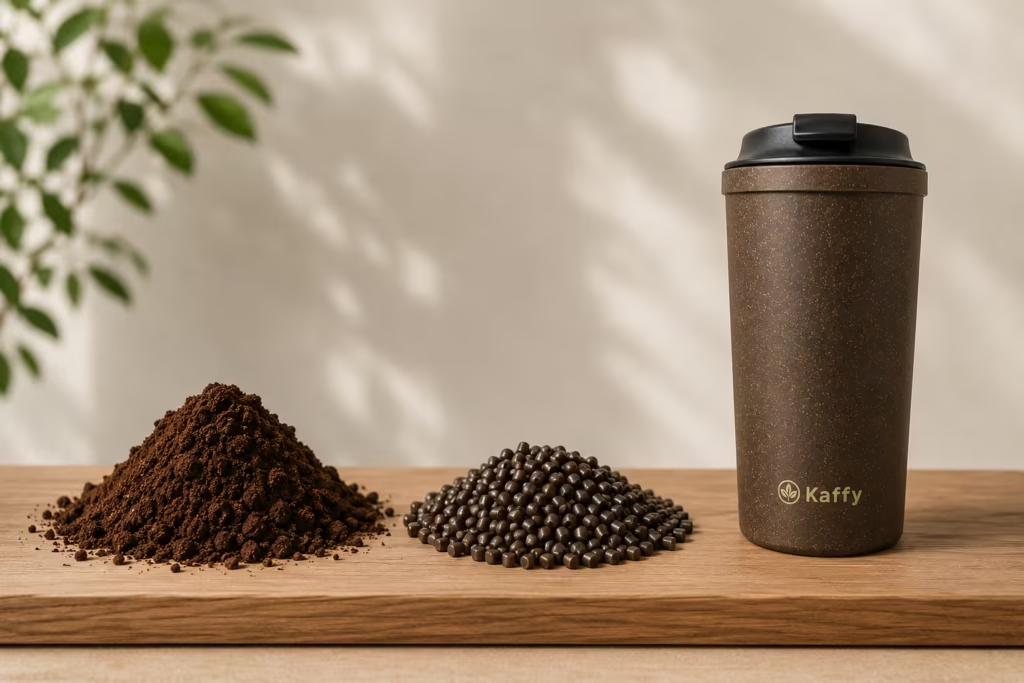
Quick Answer: Spent coffee grounds are dried below 10% moisture, milled to consistent particle size, and blended with food-safe binding polymers and natural additives. The mix is shaped under heat and pressure into the tumbler body. The finished product is rigid, dishwasher-tolerant on top-rack settings, and engravable.
The process matters because it is what defends the recycled-content claim in audit. A biocomposite tumbler whose grounds make up only a token percentage is closer to plastic than circular. The Kaffy material targets a meaningful coffee-grounds proportion so the recycled-content story holds up to scrutiny, while keeping the binder system food-safe and structurally reliable.
Wet grounds out of an espresso machine cannot go straight into the production line. They are dried to below 10% moisture and screened for contaminants like sugar residue or paper filter shreds.
The binder is what keeps the tumbler dimensionally stable through hot drinks, cold drinks and dishwashing. Reputable manufacturers use food-safe blends. The Kaffy binder is documented and disclosable to ESG audit teams on request.
The blend is shaped into the tumbler form using compression. The finished product takes laser engraving exceptionally well, the laser exposes a tonal contrast between the surface and the lower layer, creating crisp, permanent marks.
The honest test of any sustainable drinkware product is whether it survives daily use long enough to pay back its embedded carbon. A Kaffy biocomposite tumbler clears that bar comfortably when manufactured to a serious spec.
| Attribute | Coffee-grounds biocomposite | Wheat-straw biocomposite | Recycled stainless |
|---|---|---|---|
| Median active-use period | 14–18 months | 6–9 months | 24–36 months |
| Engraving fidelity | Excellent (tonal contrast) | Limited | Very good |
| Dishwasher use | Top rack OK | Hand-wash preferred | Full cycle OK |
| ESG narrative | Strongest (closed loop) | Medium | Strong |
Caption: Performance and ESG-narrative comparison between a coffee-grounds biocomposite tumbler, a wheat-straw biocomposite tumbler, and a recycled stainless tumbler.
Source: Kaffy operational data, Malaysian corporate gift orders, 2024–2026.
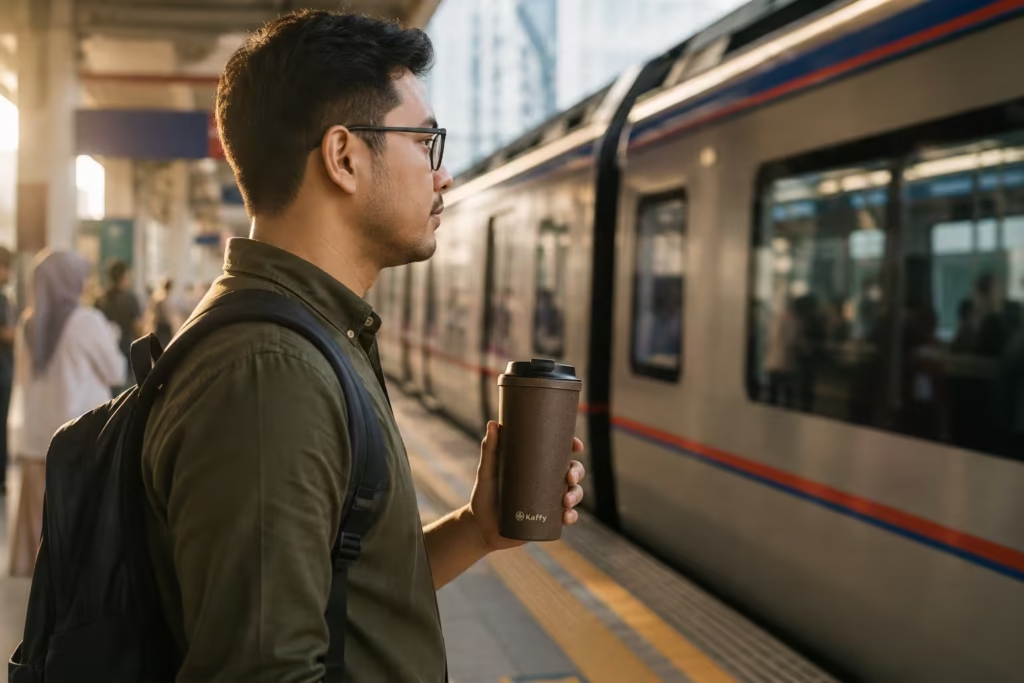
The closed-loop story is structurally different from a “recyclable” claim, because it does not depend on the recipient doing anything for the loop to close. The diversion of café grounds out of landfill happens whether the recipient knows the story or not, the kind of upstream waste-prevention logic emphasised in UN SDG 12: Responsible Consumption and Production. That makes the audit defence simpler.
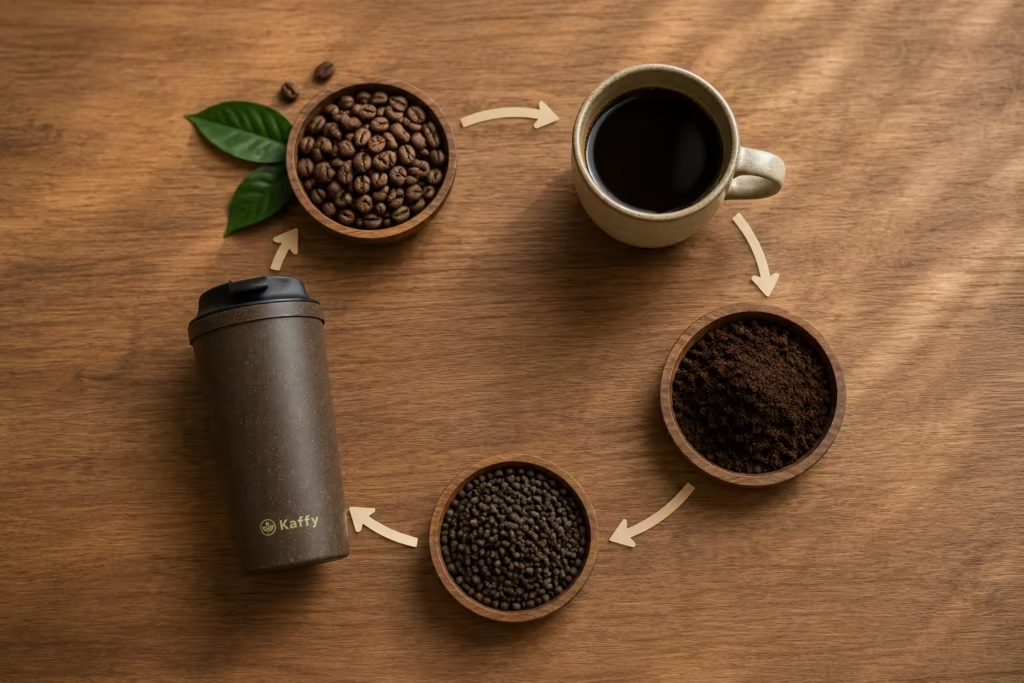
A Kaffy biocomposite Tumbler sits at a small premium to conventional reusable tumblers, typically RM 5–10 per unit at common volumes. The premium pays back through the daily-use lifespan and the audit-defensible material story.
| Order tier | Per-unit price | Lead time |
|---|---|---|
| 100 units | RM 80–110 | 2–3 weeks |
| 500 units | RM 65–90 | 3–4 weeks |
| 1,000+ units | RM 55–75 | 4–6 weeks |
Caption: Indicative per-unit price bands and lead-time ranges for a Kaffy coffee grounds tumbler with engraving at common Malaysian order tiers in 2026.
Source: Kaffy operational data, Malaysian corporate gift orders, 2024–2026.
The Kaffy Tumbler is built specifically as a coffee grounds tumbler Malaysia procurement teams can order with confidence. Three things distinguish it.
Grounds are collected from Malaysian cafés. The supply chain is short, documented, and traceable.
Engraving happens at our Petaling Jaya facility. Per-unit personalisation files do not slow the line.
Tumblers can be returned at end of life for reprocessing, a circular-economy commitment most other suppliers cannot match.
For full product details, browse the Kaffy products page and the Kaffy shop. The company background sits at Kaffy about us. Procurement teams can reach the team on the Kaffy contact page.
For sub-pillar deep-dives, see coffee ground cup corporate gift Malaysia, branded tumbler with logo Malaysia bulk, and reusable coffee cup corporate gift Malaysia. The drinkware category pillar is at sustainable drinkware corporate gifts Malaysia.
Yes. The Kaffy biocomposite is engineered to handle both hot and cold drinks within typical office and travel use. Hot drinks should sit within standard reusable-drinkware temperature ranges.
Once the grounds are processed into the biocomposite, they do not impart a noticeable scent to drinks. Recipients drink coffee out of the tumbler without any cross-flavour issue.
Median active-use period is 14–18 months. With careful handling and top-rack dishwasher use, this can extend further.
Top-rack dishwasher use is recommended. Avoid full-heat drying cycles to maximise lifespan.
Kaffy supports MOQ from 100 units for engraved orders. Lower MOQs are possible at higher per-unit cost.
Yes. Kaffy offers a return pathway for end-of-life tumblers, allowing the material to re-enter the production cycle.
If your 2026 corporate gift programme needs a circular-economy hero product with audit-defensible sustainability, the Kaffy coffee grounds tumbler in Petaling Jaya is the most direct answer in the Malaysian market. Contact Kaffy for a quote, or message us on WhatsApp for a same-day estimate. We will confirm material spec, MOQ, lead time and budget in plain numbers, exactly the way Malaysian procurement teams need it. For broader category context, see the pillar guide on sustainable corporate gifts in Malaysia.