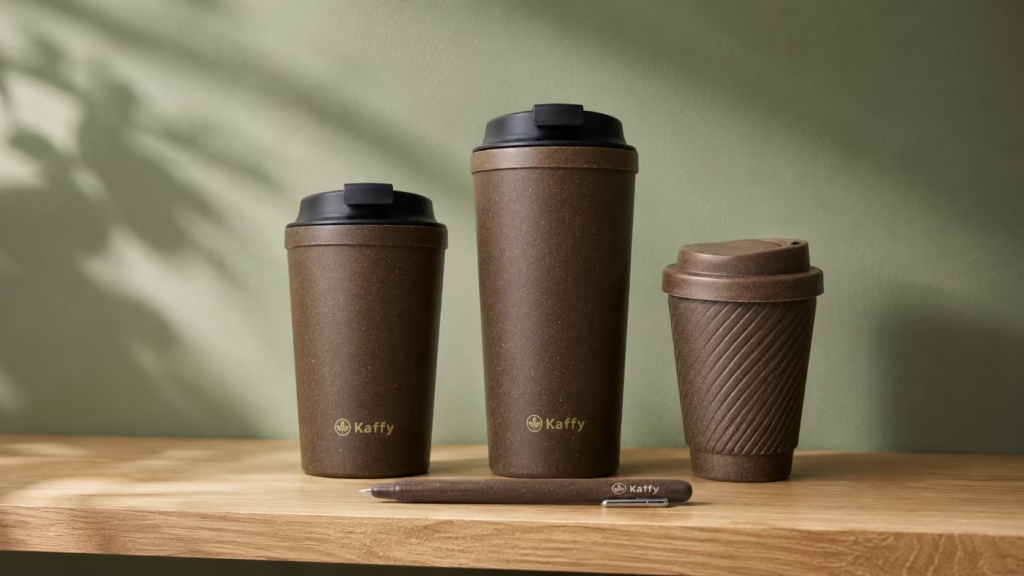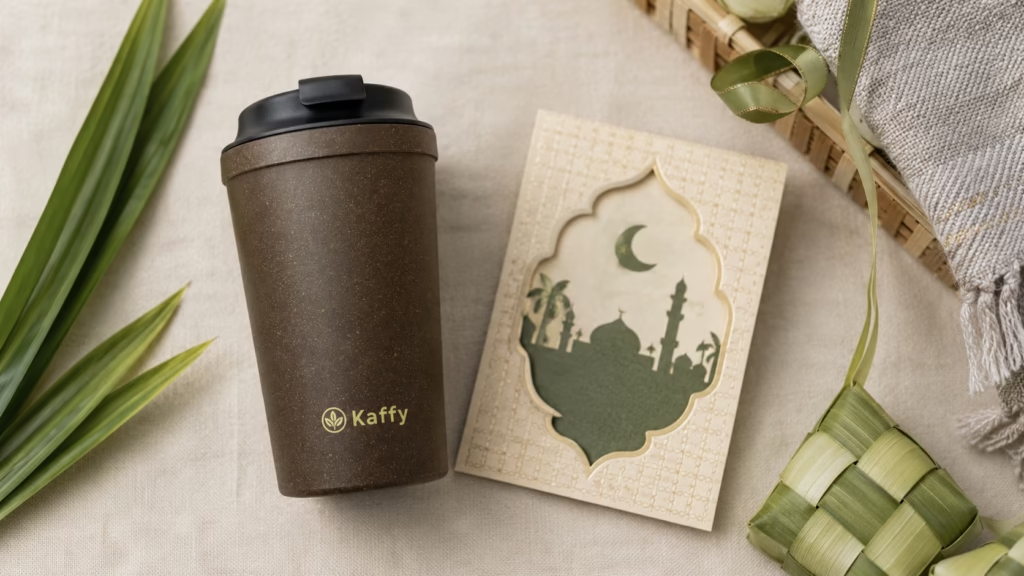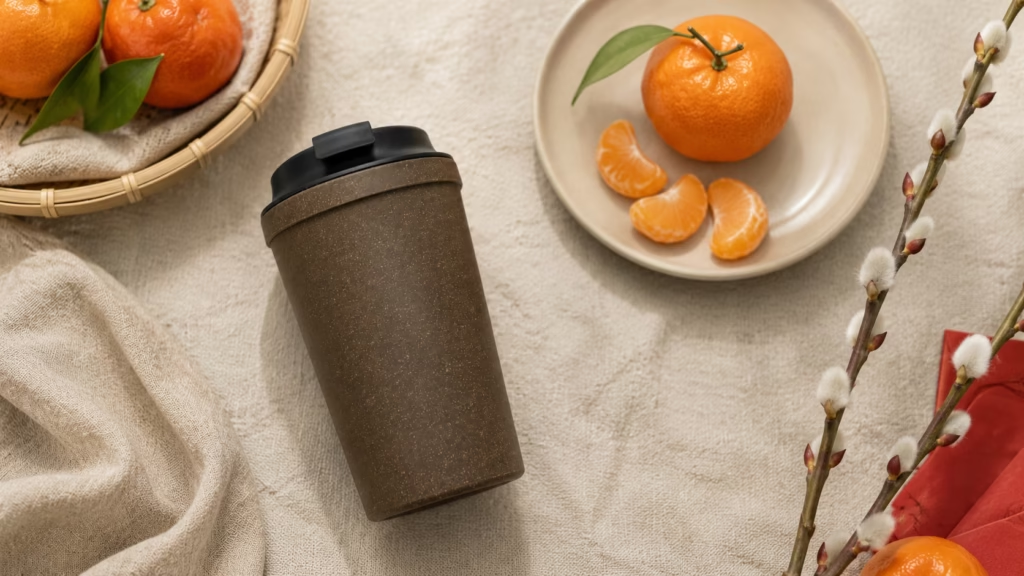
TL;DR — Laser engraved corporate gifts Malaysia procurement teams favour in 2026 deliver three things print and pad-printing cannot — permanence, a clean ESG story, and a premium tactile finish on tumblers, flasks and biocomposite drinkware. Engraving has overtaken print as the default customisation method on most Kaffy briefs above MOQ 200. This guide explains where engraving fits, what it costs, what depths and contrasts work on which materials, and how to brief the artwork to come back right the first time.
The customisation conversation in Malaysian B2B gifting has shifted. For years the default was pad print or screen print — quick, cheap, and easy to redo. By 2026 the default has moved to laser engraving, and the change is not driven by aesthetics alone. Engraving leaves no ink layer, no chemical residue, no peel-off film. It survives the dishwasher, the desk drawer, and the recipient’s gym bag.
Across the Kaffy order book, the share of orders specifying laser engraving as the customisation method has grown roughly twofold since 2024. The reasons are practical: engraving aligns with ESG audit answers, looks premium under any office light, and reads as deliberate rather than promotional.
This guide is for Malaysian HR, marketing and procurement buyers scoping engraved customisation across tumblers, flasks, biocomposite drinkware and recycled-stainless gifts. The video below is a useful primer on engraving consistency at scale.
Quick Answer: Laser engraved corporate gifts Malaysia buyers prefer in 2026 deliver permanence (no ink to fade), a cleaner ESG story (no chemical layer), and a premium tactile finish. Across Kaffy briefs above MOQ 200, engraving now sits at roughly 70% share, up from 35% in 2024.
The simplest reason is durability. A pad-printed logo on a tumbler typically fades inside six to twelve months of daily use. An engraved logo holds for the life of the product — a permanence that materials-science overviews of laser engraving attribute to substrate ablation rather than surface adhesion. For procurement teams measuring brand mileage on retention, engraving is the cleaner answer.
The second reason is ESG-aligned. Pad print and screen print add an ink layer that complicates recyclability and makes “what happens at end of life” harder to answer. Laser engraving removes that question — the gift is the same material from front to back, with the artwork etched into the surface, which makes the disclosure cleaner against the Bursa Malaysia Sustainability Reporting framework.
| Method | Share 2024 | Share 2026 |
|---|---|---|
| Laser engraving | ~35% | ~70% |
| Pad print | ~30% | ~14% |
| Screen print | ~22% | ~10% |
| Heat transfer / vinyl | ~13% | ~6% |
Caption: Customisation method share across Malaysian B2B drinkware orders, 2024 vs 2026.
Source: Kaffy operational data, Malaysian corporate gift orders, 2024–2026.
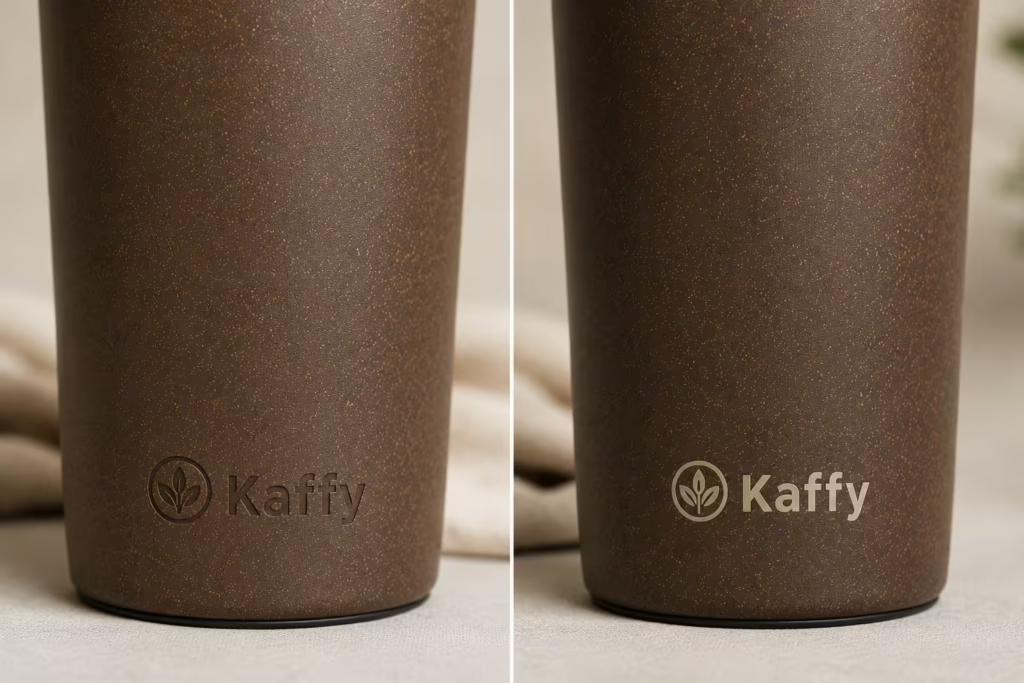
Quick Answer: Laser engraving leaves a soft cream tone on coffee-grounds biocomposite, a high-contrast white-grey on stainless steel, and a darker brown on bamboo-fibre. Each material requires different power and pass settings — the artwork is identical, but the on-product result differs.
| Material | Engraving outcome | Best for |
|---|---|---|
| Coffee-grounds biocomposite (Kaffy) | Soft cream-on-brown, high tactile feel | Premium gifting, ESG story |
| Recycled stainless steel | High-contrast white-grey on satin | Long-life flasks, premium feel |
| Anodised aluminium | Bright contrast, clean lines | Tech-adjacent gifting |
| Bamboo-fibre composite | Warm dark-brown burn, organic | Volume CSR drops |
| Coated stainless (powder coat) | Reverse engraving — strips to metal | High-contrast brand work |
Caption: Engraving outcome by material across Malaysian corporate gift drinkware in 2026.
Source: Kaffy operational data, Malaysian corporate gift orders, 2024–2026.
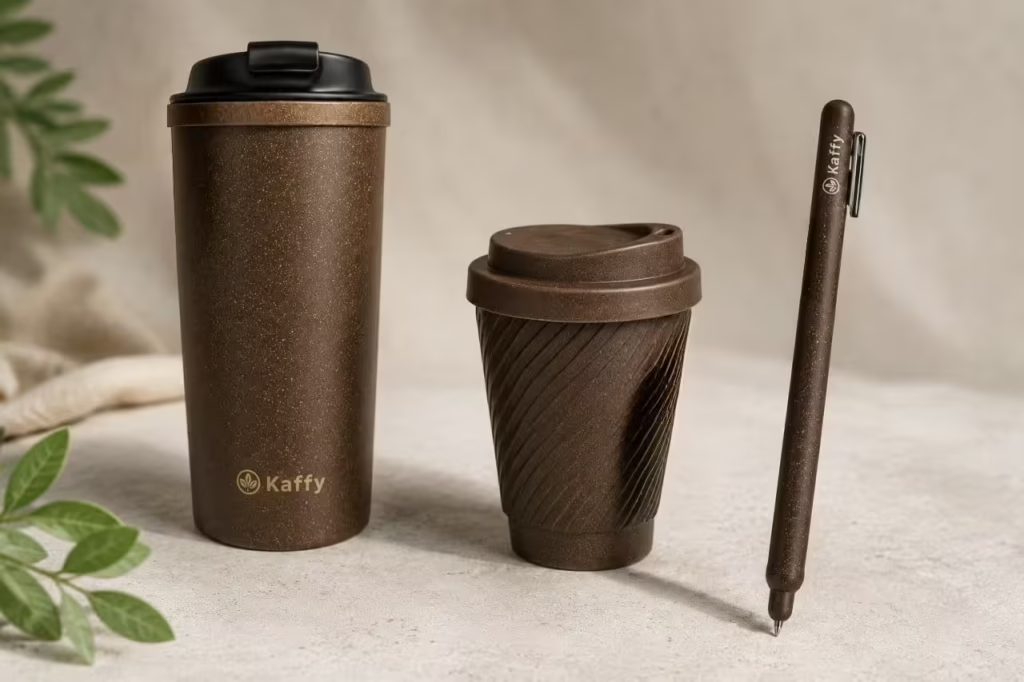
Common artwork problems are predictable. Logos with hairline strokes lose definition because the laser cannot resolve detail finer than a quarter-millimetre on most drinkware surfaces. Logos in pure greyscale fade — engraving works on contrast, not colour fidelity. Logos with text under 4mm tall become unreadable on the curve of a tumbler.
The fix is simple: outline the logo, thicken hairlines to 0.4mm minimum, and bump body copy to 5mm. A good supplier will request these adjustments before sample production. A weak supplier will engrave the original file and send a sample no one is happy with.
| Engraving spec | Added per-unit RM | MOQ at this rate |
|---|---|---|
| Single-position company logo | RM 4–8 | 200+ |
| Logo + tagline (one face) | RM 6–10 | 300+ |
| Two-face engraving | RM 9–14 | 500+ |
| Recipient first-name personalisation | +RM 3–6 | 100+ |
| Photo-realistic engraving | +RM 7–14 | 100+ |
Caption: Indicative engraving cost on Malaysian B2B tumbler orders by spec and MOQ in 2026.
Source: Kaffy operational data, Malaysian corporate gift orders, 2024–2026.
Most Malaysian suppliers add three to seven extra days for engraving artwork sign-off, sample production, and physical proof. On a 1,000-unit Kaffy tumbler order the engraving stage adds roughly five working days inside a five-week lead time. If recipient names are added, plan for an extra five to seven days for CSV processing.
The first is approving a digital mock-up without seeing a physical sample. Mock-ups never show how the laser actually reads on the curve. The second is engraving on coated drinkware without confirming whether the brief calls for reverse engraving (strips to metal) or surface engraving (darker tone on coating). The third is engraving in two positions when one would be cleaner — visual restraint reads as quality.
Kaffy laser engraves every order in the same Petaling Jaya facility where the coffee-grounds biocomposite tumbler is moulded. There is no outsourcing step, which removes the most common cause of colour drift across a bulk run. Engraving samples are produced on the actual stock, not on a generic blank, so what the buyer approves is what the recipient receives — a quality model consistent with industry guidance from the Promotional Products Association International (PPAI).
Browse the broader range at Kaffy products and the Kaffy shop. Brand background sits at Kaffy about us, and the team is reachable at Kaffy contact.
For broader category context see our pillar on custom corporate gifts Malaysia, and the related sub-pillar on personalised corporate gifts Malaysia. Drinkware-specific guidance lives at sustainable drinkware corporate gifts Malaysia, and product-specific context at coffee grounds tumbler Malaysia.
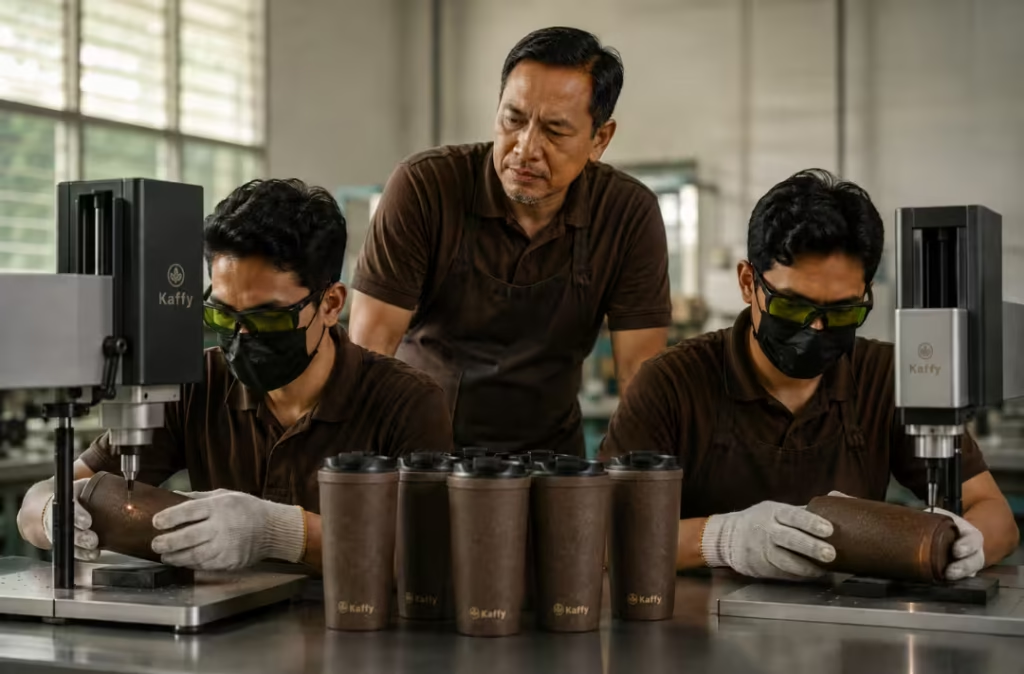
Gifts customised by laser etching artwork directly into the surface of the product, leaving no ink layer. Common formats include engraved tumblers, flasks, pens, leather and biocomposite drinkware.
Single-position logo engraving adds RM 4–8 per unit at MOQ 200 and above. Two-face engraving adds RM 9–14. Recipient personalisation adds a further RM 3–6.
Yes. Engraving on coffee-grounds biocomposite leaves a soft cream-on-brown tone with a slight tactile relief. It reads as premium and aligns cleanly with the ESG story.
Vector files — AI, EPS, SVG, or high-resolution PDF outlines. Hairlines should be at least 0.4mm thick; body copy should be 5mm or larger.
Yes. Supply the recipient list in CSV at artwork sign-off. Add five to seven days of lead time and RM 3–6 per unit on the engraving cost.
Five to six weeks for a 1,000-unit engraved Kaffy tumbler order, including artwork sign-off, sample approval, engraving runs, sleeve assembly and dispatch.
If your team is scoping laser engraved corporate gifts Malaysia procurement and recipients can both defend, the Kaffy team in Petaling Jaya can help. We supply the Kaffy Tumbler in coffee-grounds biocomposite, with on-site laser engraving, recycled-card sleeve packaging, and full supplier documentation. Contact Kaffy for a quote, or message us on WhatsApp for a same-day estimate.