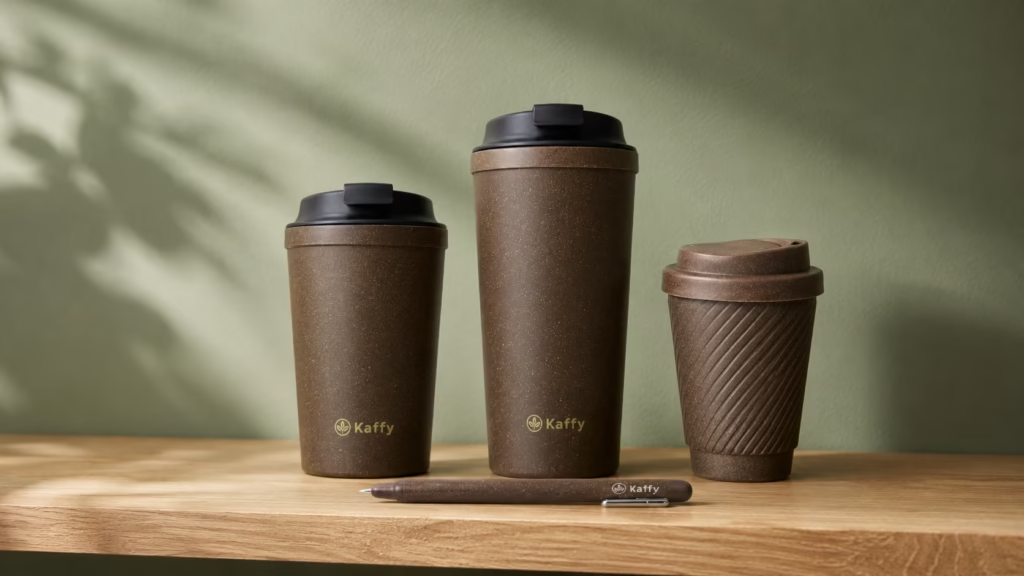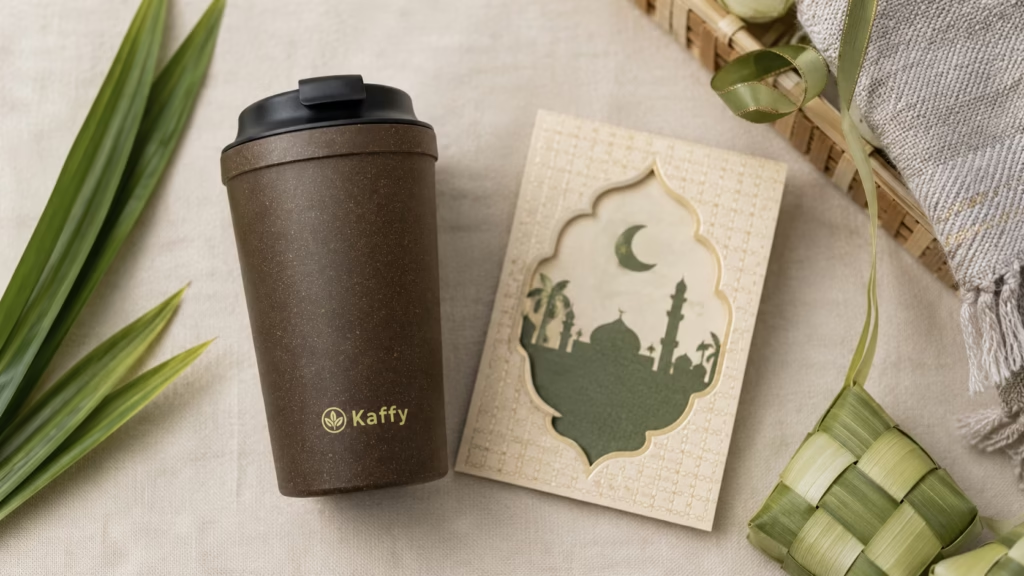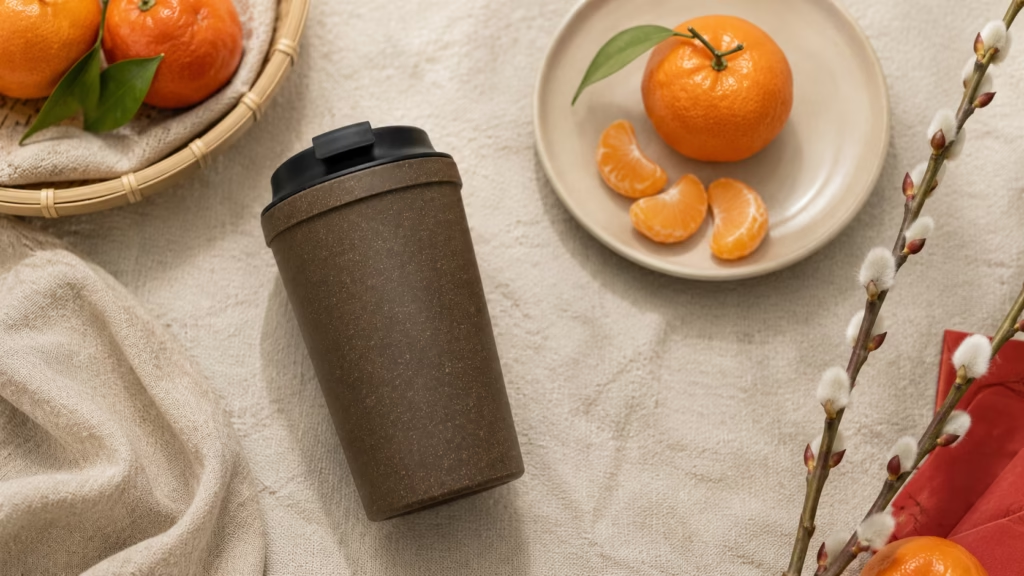
TL;DR — A reusable coffee cup corporate gift Malaysia teams hand out in 2026 has to do two things at once: replace single-use takeaway cups in daily routines, and read as a deliberate sustainability gesture rather than a generic giveaway. The Kaffy biocomposite cup hits both, with roughly 80g of spent coffee grounds in the body and on-site laser engraving in Petaling Jaya. This guide walks through single-use waste benchmarks, café BYOC discount adoption, recipient retention rates, and the order workflow.
Single-use takeaway cup waste in Malaysian offices stopped being invisible around 2023. Building managers started weighing café-floor bins, sustainability officers started reading the numbers into ESG dashboards, and HR procurement got pulled into a category they had not previously owned: reusable drinkware. The shift turned a niche product into a default Q3 brief.
By 2026 the question has narrowed. Buyers do not ask whether a reusable cup belongs in the gift mix; they ask which one. The answer balances three constraints: material story, daily-use durability, and a customisation method recipients keep on the desk rather than the kitchen drawer.
This guide is for Malaysian sustainability, ESG and marketing procurement leads scoping the category. The video below sets useful context on how reusable drinkware actually compares to single-use formats over a year of daily use.
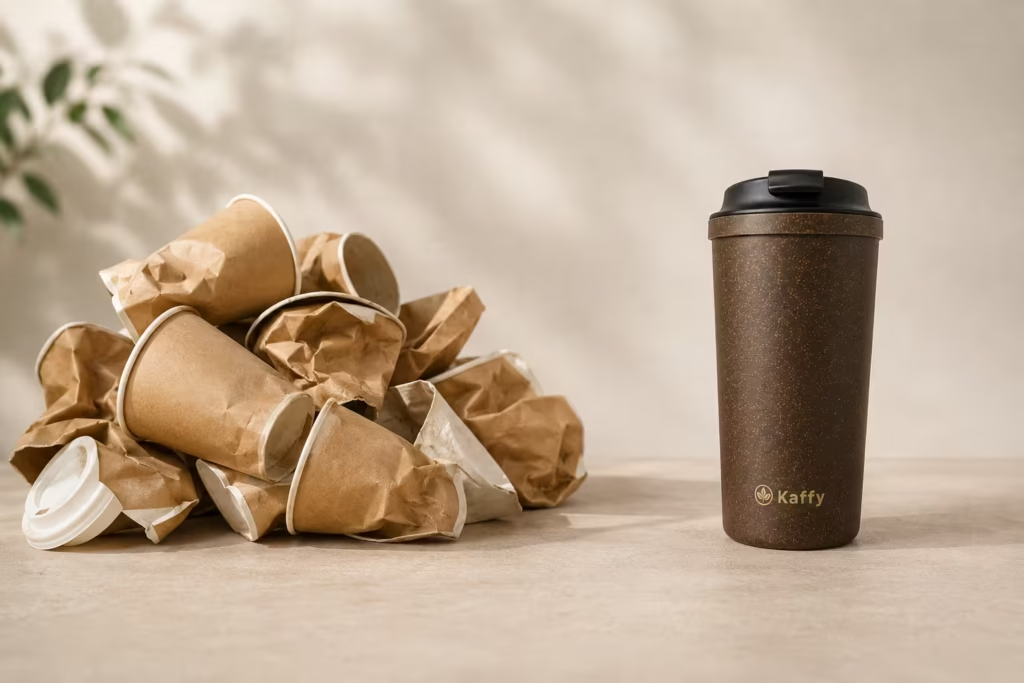
Quick Answer: A typical Klang Valley office of 200 staff generates roughly 15,000 single-use takeaway cups per year from café and pantry runs. A reusable cup gifted at onboarding cuts that figure by about 35% on Kaffy’s six-month tracking sample.
The single-use takeaway cup count is bigger than most HR leads expect. Café cups, pantry coffee cups, kiosk cups for tea breaks, they pile up across an office year unmeasured. National-level waste-reduction direction sits with the Department of Environment Malaysia (DOE), which makes single-use cup baselines an audit-relevant figure. When a sustainability officer counts them honestly, the number reframes what a reusable coffee cup corporate gift Malaysia HR teams hand out actually does.
| Office size | Cups/year (no reusable) | Cups/year (with reusable) |
|---|---|---|
| 50 staff | ~3,750 | ~2,440 |
| 200 staff | ~15,000 | ~9,750 |
| 500 staff | ~37,500 | ~24,375 |
| 1,000 staff | ~75,000 | ~48,750 |
Caption: Single-use takeaway cup waste across Klang Valley offices in 2026, comparing baseline against gifted-reusable adoption.
Source: Kaffy operational data, Malaysian corporate gift orders, 2024–2026.
Quick Answer: The “Bring Your Own Cup” discount has expanded from independent cafés to mainstream chains in 2026. Roughly 62% of Klang Valley specialty cafés now offer RM 1–2 off when staff bring a reusable cup, up from 28% in 2024.
The bring-your-own-cup (“BYOC”) discount sits inside the recipient’s daily café visit. Most Klang Valley specialty cafés and a growing share of mainstream chains now offer RM 1–2 off when a customer presents a reusable cup, incentive design that mirrors the responsible-consumption emphasis of UN SDG 12. Across a workweek that adds up to a tangible saving for the recipient and a measurable reason to keep using the gifted cup rather than swap back to a single-use lid.
| Café type | BYOC discount 2024 | BYOC discount 2026 |
|---|---|---|
| Independent specialty cafés | ~48% | ~78% |
| Klang Valley specialty (overall) | ~28% | ~62% |
| Mainstream chain cafés | ~12% | ~41% |
| Mall kiosks / quick-serve | ~4% | ~18% |
Caption: Café BYOC discount adoption rates across Klang Valley, 2024 vs 2026.
Source: Kaffy operational data, Malaysian corporate gift orders, 2024–2026.
| Format | Daily use at 1 month | Daily use at 6 months |
|---|---|---|
| Engraved biocomposite cup (Kaffy) | ~78% | ~62% |
| Stainless-steel coffee cup (printed) | ~64% | ~41% |
| Plastic / acrylic reusable cup | ~52% | ~24% |
| Generic logo-only mug | ~38% | ~15% |
Caption: Reusable cup retention rates after gifting across Kaffy six-month tracking sample, 2026.
Source: Kaffy client tracking, Malaysian B2B accounts, 2024–2026.
| Material | Heat ceiling | ESG audit answer |
|---|---|---|
| Coffee-grounds biocomposite (Kaffy) | ~80°C | Strong — waste-derived feedstock |
| Recycled stainless steel | ~95°C | Strong — long lifecycle |
| Bamboo-fibre composite | ~75°C | Mixed — binder formulations vary |
| Plastic / acrylic reusable | ~70°C | Weak — virgin polymer |
Caption: Reusable cup material comparison across Malaysian B2B gift drinkware in 2026.
Source: Kaffy operational data, Malaysian corporate gift orders, 2024–2026.
Kaffy biocomposite cups price between RM 28–48 per unit at common bulk MOQs, depending on engraving and packaging. A 250-employee programme with logo engraving and recycled-card sleeve runs RM 10,500–13,250 in total, including documentation and Pos Laju dispatch. Stainless steel reusable cups carry a higher unit cost (RM 42–62) for the same engraving spec, and plastic alternatives sit at RM 14–22 with weaker audit answers.
A Malaysian reusable cup order with engraved logo and recycled-card sleeve ships in three to five weeks. The first two weeks cover artwork sign-off and physical sampling on the actual moulded stock; the remaining time covers engraving, sleeve assembly, QC, and Pos Laju dispatch. Recipient name engraving adds a five to seven day buffer for CSV processing and sampling.
The first is briefing the cup as a coffee mug. A reusable coffee cup is designed for transit: sealable lid, double-wall insulation, fits café espresso machines and pantry pumps. The second is briefing artwork without checking the curve. Logos that read flat on a digital mock-up wrap unevenly on the actual cup. The third is over-spec-ing the lid colour. Most recipients value the cup body, not the lid finish; budget should follow that hierarchy.
Kaffy mills the spent grounds, blends the binder, moulds the cup, runs the laser engraver and assembles the recycled-card sleeve in the same Petaling Jaya facility. There is no overseas leg, and no outsourced engraving partner introducing colour drift. For an ESG and marketing lead who needs a defensible biocomposite reusable coffee cup corporate gift Malaysia procurement teams can audit, that locality is the audit answer in one sentence and aligns with the disclosure expectations of the Bursa Malaysia Sustainability Reporting framework.
Browse the broader Kaffy range at Kaffy products and the Kaffy shop. Brand background sits at Kaffy about us, and the team is reachable at Kaffy contact.
For broader category context see our pillar on sustainable drinkware corporate gifts Malaysia, and the brand-defining hub on coffee grounds tumbler Malaysia. The product-level sub-pillar lives at coffee ground cup corporate gift Malaysia, and ESG framing at ESG corporate gifts Malaysia.
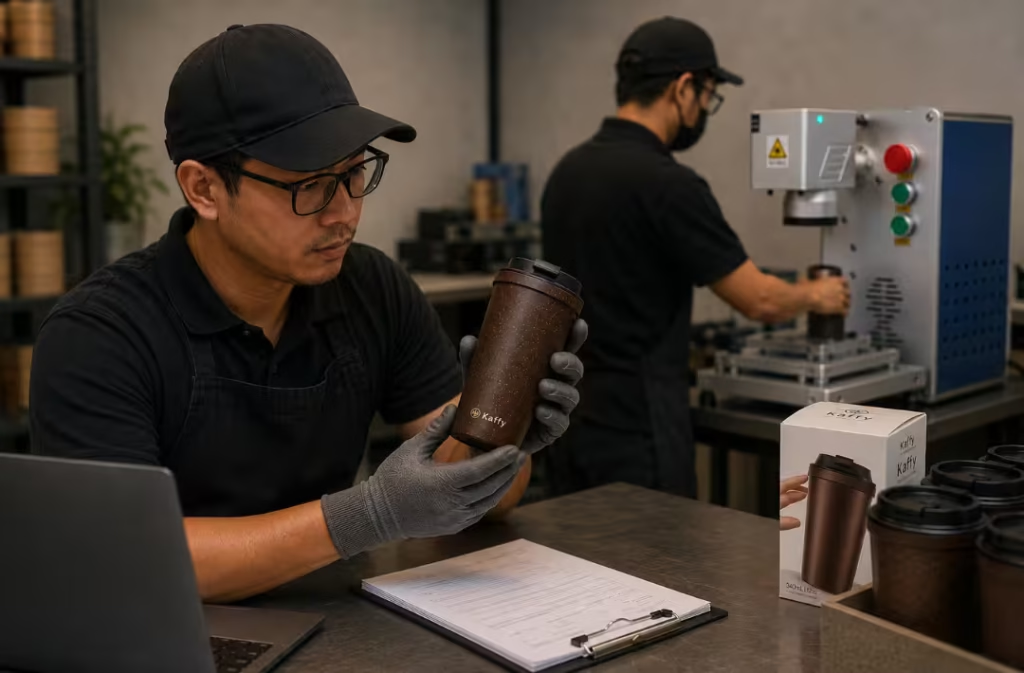
A sealable, daily-use cup designed to replace single-use takeaway formats: typically with a leakproof lid, double-wall insulation, and a body sized to fit common café espresso machines.
Roughly 65 single-use takeaway cups per recipient per year on Kaffy’s six-month tracking sample, scaling linearly with daily use.
Coffee-grounds biocomposite and recycled stainless steel both produce strong audit answers. Plastic and virgin-polymer formats sit poorly on most ESG dashboards.
Yes, engraved biocomposite cups hold daily use at 62% of recipients through six months, against 15% for generic logo mugs on the same tracking sample.
Yes. The Kaffy biocomposite cup is rated for hot drinks up to roughly 80°C, dishwasher safe, and sized to fit most café espresso machines and pantry pumps.
Three to five weeks for a Kaffy reusable cup order with engraved logo and recycled-card sleeve, including artwork sign-off, sampling, engraving, QC and Pos Laju dispatch.
If your team is briefing a reusable coffee cup corporate gift Malaysia recipients will use beyond the first week, the Kaffy team in Petaling Jaya can help. We supply the Kaffy biocomposite cup, on-site laser engraving, recycled-card sleeve packaging, and full ESG documentation. Contact Kaffy for a quote, or message us on WhatsApp for a same-day estimate.