TL;DR — ESG corporate gifts Malaysia procurement is a different brief from “eco-friendly” gifting. The buyer is usually a sustainability or ESG officer working alongside HR or marketing, and the question is not “does this look green?” but “does this survive an audit?” Bursa Malaysia’s expanded sustainability reporting framework, multinational parent-company mandates, and GLC procurement scoring have pulled corporate gifts into the ESG audit lens. This guide covers what counts as ESG-defensible, the five documentation requirements that should be ready in a working day, why the Kaffy Tumbler in coffee-grounds biocomposite earns high audit-pass scores, and how to brief a supplier so the documentation arrives without follow-up emails.
The phrase “ESG corporate gifts Malaysia” tends to confuse the market because it overlaps with — but is not identical to — “eco-friendly” or “sustainable” corporate gifts. The difference is the audience reviewing the gift. Eco-friendly gifts pass the recipient’s sniff test. ESG-grade gifts are what procurement teams need to defend in a Bursa-aligned audit, a parent-company sustainability review, or a GLC scoring matrix.
That difference is procedural, not philosophical. An ESG-grade gift requires documentation: recycled-content percentage, country of manufacture, end-of-life pathway, supplier audit evidence, and a transparent material story. A genuinely sustainable gift that lacks that documentation often fails the same audit a less sustainable but better-documented item would pass.
This guide is written for the sustainability and procurement officers who actually live with that audit. It draws on Kaffy’s order book, the questions ESG buyers ask before signing, and the patterns we see in 2024–2026 Malaysian B2B procurement. The short video below sets the lifecycle context that frames the rest of the discussion.
Quick Answer: ESG corporate gifts in Malaysia are gifts that pass an environmental, social and governance audit — not just gifts that look sustainable. Pass criteria include documented recycled or bio-based material content, supplier-audit evidence, country-of-manufacture traceability, and an end-of-life pathway. Documentation is the deciding factor.
Environmental criteria cover material origin, recycled or bio-based content, transport emissions, and end-of-life impact. Social criteria cover supplier labour practices, community sourcing, and gender or minority business inclusion in the supply chain. Governance criteria cover transparency, traceability, and the supplier’s own ESG reporting maturity.
The defensible answer to a reviewer working through the Bursa Malaysia Sustainability Reporting framework is not “we bought eco-friendly tumblers”. It is “we bought 500 units of locally-made biocomposite tumblers, with 40%+ recycled coffee-grounds content, from a Petaling Jaya supplier that holds [audit X], engraved on site, packaged in recycled card, with a documented closed-loop end-of-life pathway.” That sentence either lands or it doesn’t, and it is what separates ESG corporate gifts Malaysia procurement teams approve from items that look sustainable on paper.
| Document | What it confirms | Typical turnaround |
|---|---|---|
| Material composition statement | Recycled or bio-based content % | Same working day |
| Country-of-manufacture certificate | Origin (ideally Malaysia / ASEAN) | Same working day |
| Supplier code-of-conduct | Labour and ethics standards | Same working day |
| End-of-life pathway statement | Recycle / take-back / decompose | Same working day |
| Carbon footprint estimate (optional) | Per-unit kg CO₂e | 2–5 working days |
Caption: ESG documentation a corporate gift supplier should provide for Bursa-aligned audit defensibility.
Source: Kaffy operational data, Malaysian corporate gift orders, 2024–2026.
The first four documents should arrive within a working day from a serious supplier. If they take longer, the supplier is not ESG-ready. Carbon footprint estimates take a little longer because they typically involve a lifecycle calculation across the materials and production stages.
Quick Answer: ESG procurement is pulling volume because Bursa Malaysia’s expanded sustainability reporting framework, parent-company mandates at multinationals, and GLC scoring matrices now include corporate gift spend in the audit perimeter. ESG-led procurement of corporate gifts has roughly doubled in share across 2024–2026.
Three regulatory and corporate forces converged in the same window. Bursa Malaysia’s sustainability reporting framework expanded the scope of disclosed spend — paralleling the global tightening visible in the GRI Sustainability Reporting Standards — drawing items previously below the radar, including corporate gifts, into the audit lens. Multinationals operating in Malaysia inherited parent-company gift bans and material standards. GLCs and TLCs began including ESG criteria in their procurement scoring matrices.
| Period | ESG-led share of orders | Documentation requested |
|---|---|---|
| 2024 | ~24% | 2 of 5 docs |
| 2025 | ~37% | 3 of 5 docs |
| 2026 (Q1) | ~46% | 4 of 5 docs |
Caption: Share of Kaffy corporate gift orders led by ESG / sustainability officers, with the typical number of documentation items requested per order.
Source: Kaffy operational data, Malaysian corporate gift orders, 2024–2026.
| Format | Audit-pass rate | Common failure point |
|---|---|---|
| Coffee-grounds biocomposite tumbler | High | Carbon footprint estimate (slow) |
| Recycled stainless flask | High | Recycled-content evidence |
| Recycled-paper notebook | High | Pulp source traceability |
| Bamboo-fibre item | Moderate | Plastic binder content |
| Imported wine | Low | Transport emissions, scope |
| Pre-packed food hamper | Low | Plastic packaging, food waste |
Caption: Estimated ESG audit-pass rates and common failure points by Malaysian corporate gift format.
Source: Kaffy operational data, Malaysian corporate gift orders, 2024–2026.

Use this template language: “Please confirm material composition (recycled/bio %), country of manufacture, supplier code of conduct, end-of-life pathway, and indicative per-unit carbon footprint. Submit with your quote.” Suppliers without this paperwork will self-deselect; the rest will compete on substance.
ESG-grade corporate gifts carry a 12–25% premium over conventional equivalents at small volumes, and the premium narrows to under 10% at higher tiers. Most of the differential comes from material content and documentation overhead, not labour.
| Order tier | Conventional per-unit | ESG-grade per-unit |
|---|---|---|
| 100 units | RM 70–95 | RM 80–110 |
| 500 units | RM 55–80 | RM 65–90 |
| 1,000+ units | RM 48–68 | RM 55–75 |
Caption: Per-unit price comparison between conventional and ESG-grade engraved tumblers across common Malaysian B2B order tiers.
Source: Kaffy operational data, Malaysian corporate gift orders, 2024–2026.
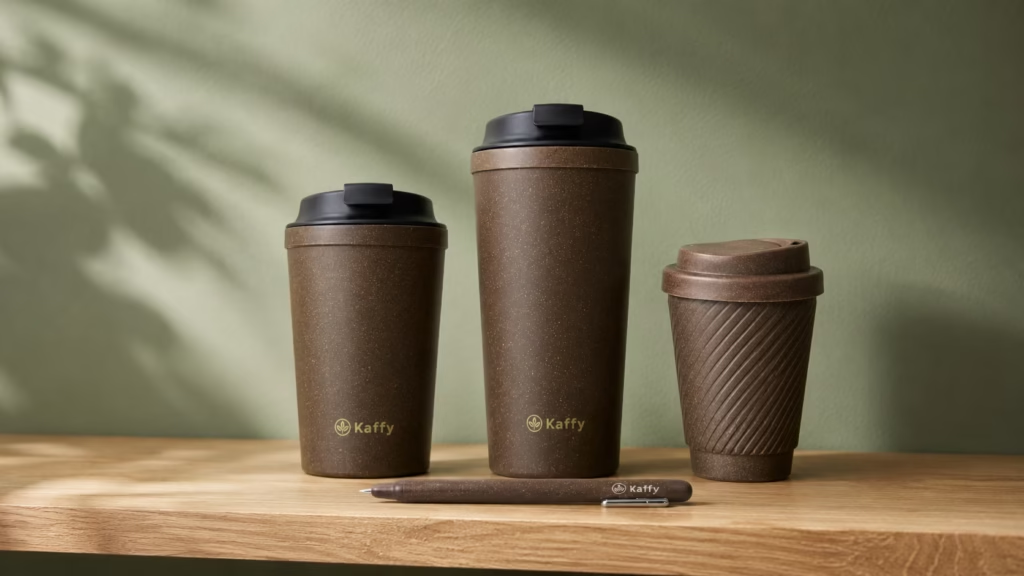
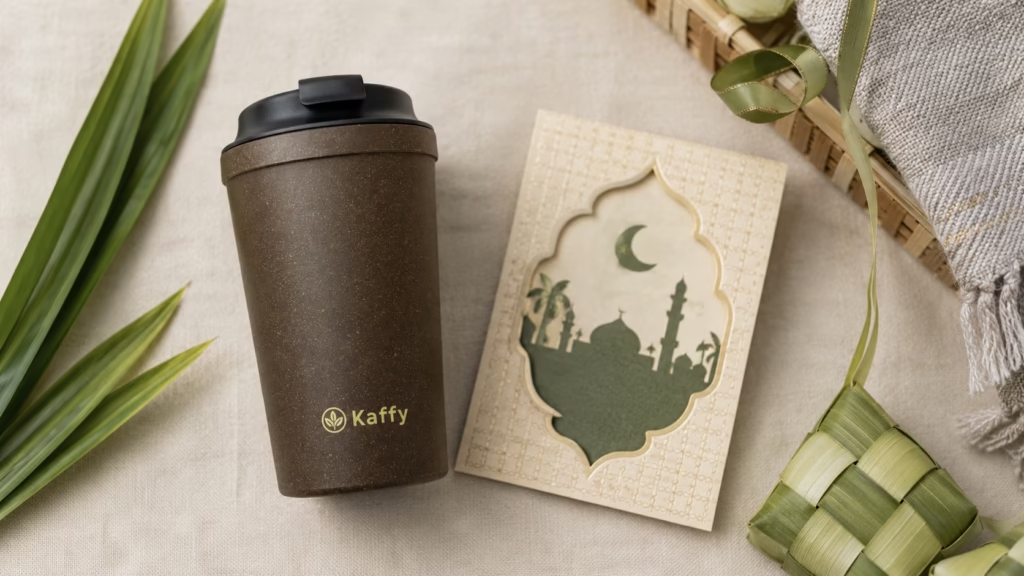
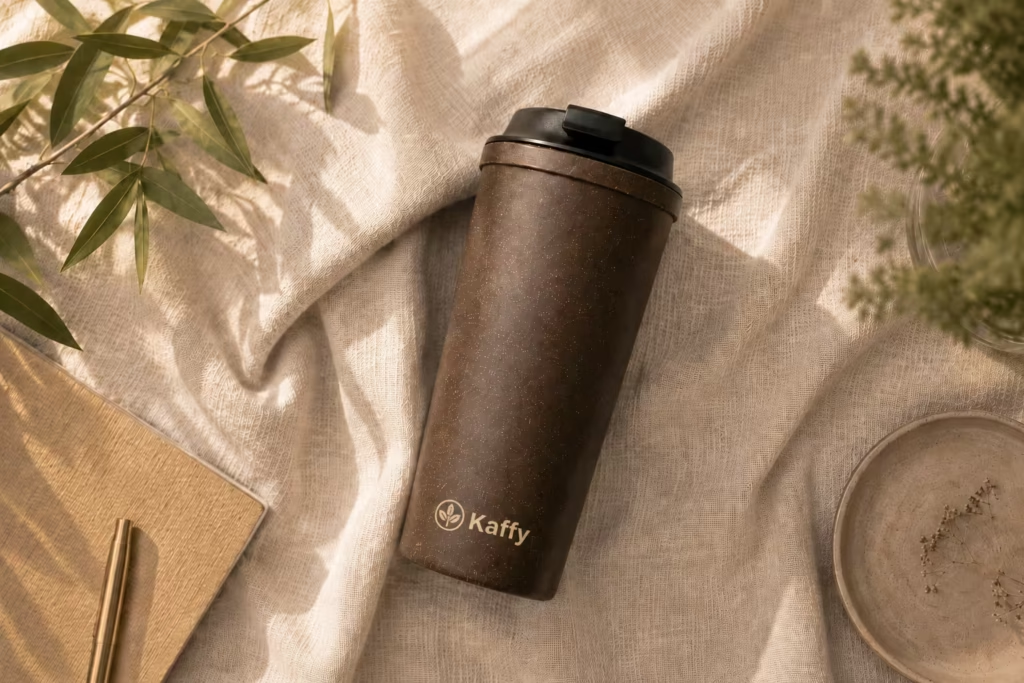
The Kaffy Tumbler is locally made in Petaling Jaya from spent coffee grounds collected across Malaysian cafés, blended with food-safe binding into a biocomposite body. Material composition, country of manufacture, supplier code of conduct, and end-of-life pathway documentation are bundled with every B2B quote. Among ESG corporate gifts Malaysia procurement teams can defend in a Bursa-aligned audit — and which align with the responsible-consumption emphasis of UN SDG 12 — the Kaffy Tumbler scores high on documentation completeness, recycled-content percentage, and end-of-life clarity.
Browse the broader range at Kaffy products and the Kaffy shop. Brand background sits at Kaffy about us, and the team can be reached on Kaffy contact.
For category context, see the pillars on sustainable corporate gifts Malaysia, sustainable drinkware corporate gifts Malaysia, and coffee grounds tumbler Malaysia. Best-of context lives at best corporate gifts Malaysia 2026.

The first mistake is buying on appearance. A bamboo-fibre cup with a polypropylene binder may look greener than a coffee-grounds biocomposite tumbler but fail the audit on plastic-content disclosure.
The second is failing to ask for documentation in the brief. Asking after award delays the project by two to three weeks and can require re-bidding.
The third is assuming “imported = premium”. For ESG-grade gifting, procurement teams should default to Malaysian-made or ASEAN-made wherever possible — transport emissions can erase the recycled-content benefit on small-volume orders.
Documentation. ESG-grade gifts come with material composition statement, country-of-manufacture certificate, supplier code of conduct, end-of-life pathway statement, and ideally a carbon footprint estimate.
Not as hard as in 2023. Roughly half of established Klang Valley suppliers can produce the four core documents within a working day in 2026.
12–25% at 100-unit tiers, narrowing to under 10% at 1,000-unit tiers. Most of the gap comes from material and documentation, not labour.
Imported wine, pre-packed food hampers, and bamboo-fibre items with undisclosed plastic binders.
Yes. Material composition, country of manufacture, supplier code of conduct, and end-of-life pathway statements are bundled with every B2B quote. Carbon footprint estimates are available on request.
It can, but it should be requested upfront in the brief. Adding documentation requirements after award typically extends the project by two to three weeks.
If you are scoping ESG corporate gifts Malaysia procurement teams must defend in a Bursa-aligned audit, the Kaffy team in Petaling Jaya can help. We supply the Kaffy Tumbler in coffee-grounds biocomposite, with on-site laser engraving and the four core ESG documents bundled with every B2B quote. Contact Kaffy for a quote, or message us on WhatsApp for a same-day estimate.