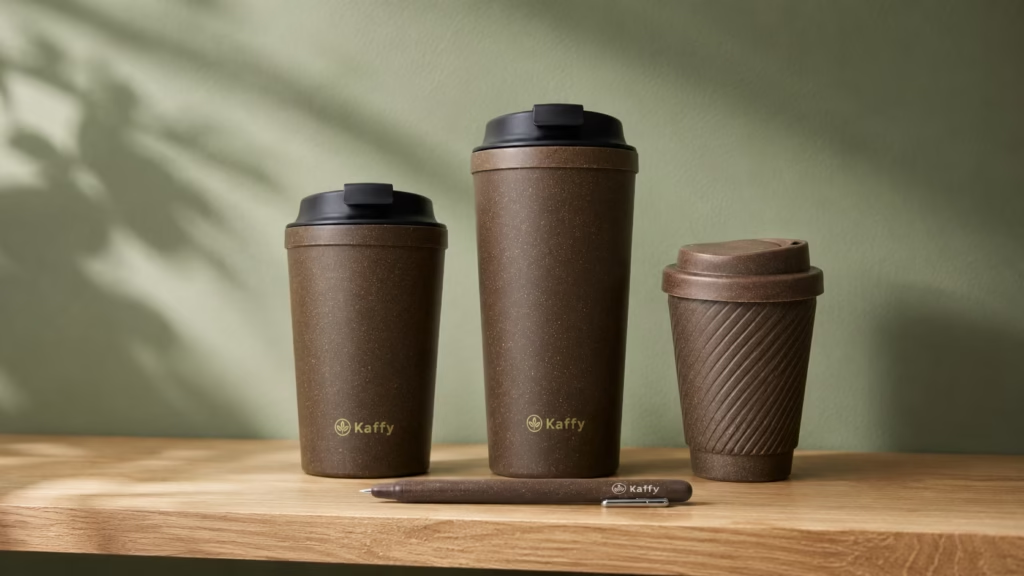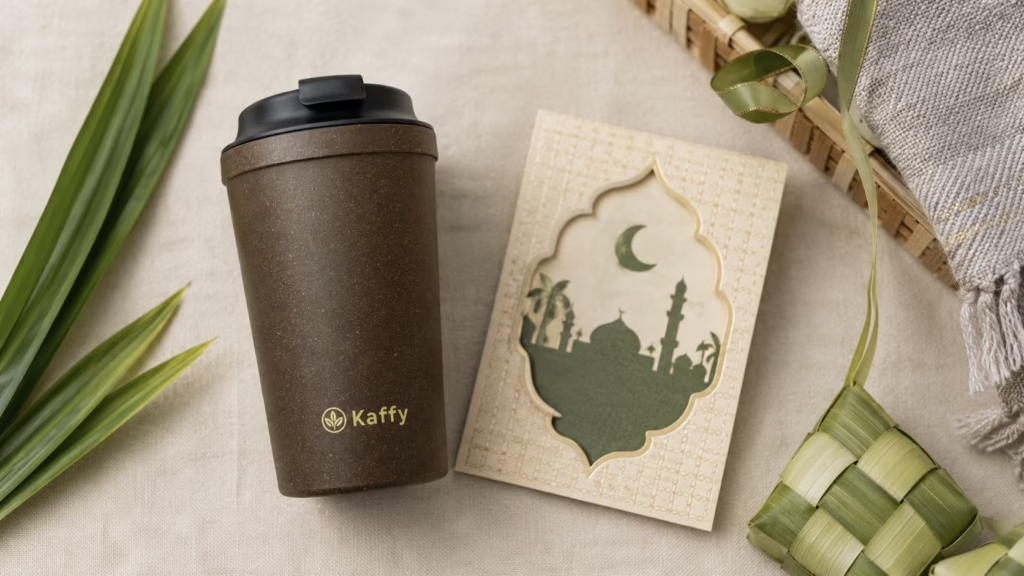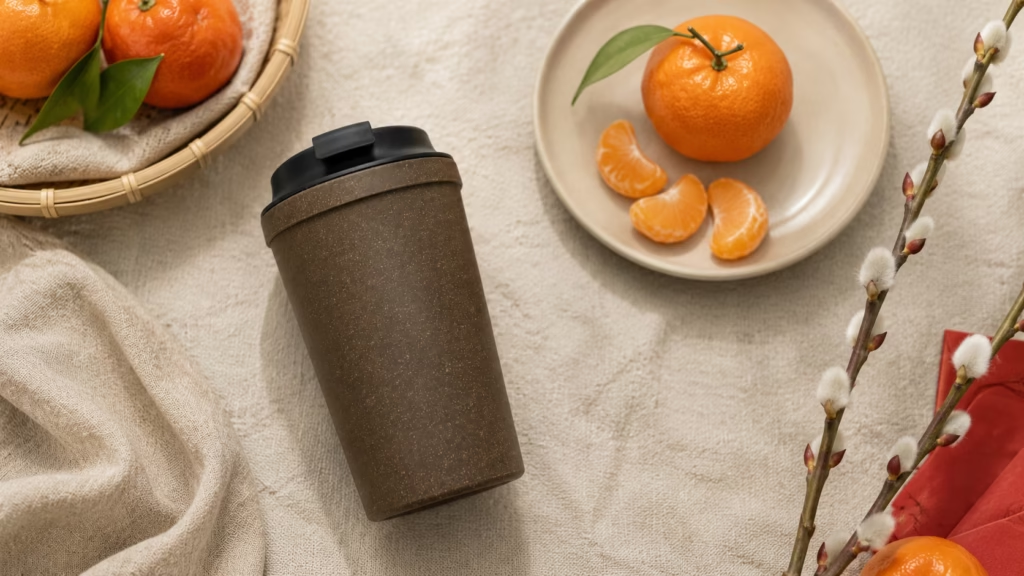
TL;DR — Buying eco-friendly corporate gifts Malaysia procurement teams can defend in 2026 means narrower questions than five years ago. Sustainability officers want material provenance, recycled-input percentages, end-of-life behaviour and a Malaysian production address — not a vague “green” claim on the box. The Kaffy Tumbler in coffee-grounds biocomposite, laser engraved on site in Petaling Jaya, fits the brief because every input is traceable back to a Malaysian café and every gift carries a recyclable sleeve. This field guide walks Malaysian HR, marketing and ESG buyers through what “eco-friendly” actually means on a 2026 audit, what to ask suppliers, and where the budget bands sit.
Five years ago, “eco-friendly corporate gifts” mostly meant a bamboo pen or a jute tote. The phrase has tightened. Today, when a Malaysian procurement lead types “eco-friendly corporate gifts Malaysia” into the search bar, the brief sitting on their desk usually carries three new questions: which materials, where produced, and what happens at end of life. Generic green claims no longer survive the audit.
That tightening is visible across our order book. Kaffy clients placing orders in 2024 asked the supplier to confirm the gift was “sustainable”. By 2026, the same clients ask for the recycled-input percentage, the Malaysian production address, and a one-line statement of what happens to the product when its useful life ends. The bar has moved.
This guide collects what works for Malaysian B2B buyers scoping eco-friendly corporate gifts in 2026. The short video below frames the broader lifecycle reality — useful context before quoting any single product as “eco”.
Quick Answer: Eco-friendly corporate gifts Malaysia auditors approve in 2026 share four traits — verifiable recycled or bio-based inputs, a known Malaysian or regional production address, a long daily-use lifespan, and recyclable or compostable packaging. Generic “green” claims without these four points fail the review.
The shift from “sustainable” to “eco-friendly” sounds like marketing nuance, but in procurement it carries weight. Sustainability officers now ask for the recycled-input percentage on the body of the gift, the Malaysian or regional address where it was produced, the expected daily-use lifespan, and the disposal route. A bamboo pen with mystery glue and an unknown factory address no longer clears that bar.
Across the Kaffy client base, the proportion of buyers requesting documented input percentages climbed from a small minority in 2024 to a clear majority by early 2026. The product brief is not getting greener in the abstract — it is getting more specific.
| Trait | % of Kaffy briefs requesting (2024) | % of Kaffy briefs requesting (2026) |
|---|---|---|
| Verifiable recycled or bio-based input % | ~24% | ~71% |
| Malaysian or regional production address | ~38% | ~66% |
| Daily-use lifespan over 12 months | ~30% | ~58% |
| Recyclable or compostable packaging | ~28% | ~62% |
Caption: Year-on-year change in eco-credential requests across Kaffy briefs.
Source: Kaffy operational data, Malaysian corporate gift orders, 2024–2026.
Each trait is a question the buyer can answer in writing on an audit form. That is the test. If you cannot complete the line, the claim is decorative, not procurement-grade.
Quick Answer: Bursa Malaysia’s enhanced sustainability disclosure rules, recipient fatigue with single-use giveaways, and stricter internal procurement scoring frameworks are the three drivers pushing Malaysian buyers from generic “green” gifts toward eco-friendly corporate gifts with documented provenance.
The first driver is regulatory. Companies listed on the Bursa Malaysia Sustainability Reporting framework operate under disclosure rules that ask them to itemise procurement inputs by ESG category. A gift programme that cannot answer the recycled-input question becomes an audit footnote no one wants.
The second driver is recipient. Across our 2024–2026 client tracking, three-month active-use rates for engraved daily-use items consistently outpaced disposable plastic giveaways by a factor of around five to ten. Recipients quietly stopped pretending to value pens that ran out in a week.
The third driver is internal scoring. More Malaysian companies now score procurement on a sustainability axis. A gift programme that scores well on one metric — “spend per unit” — but poorly on another — “ESG-aligned share” — surfaces in quarterly reviews. Eco-friendly corporate gifts give procurement a clean answer to both.
| Material | Audit fit | Typical RM range |
|---|---|---|
| Coffee-grounds biocomposite (Kaffy) | Excellent — Malaysian inputs, traceable | RM 60–95 |
| Recycled stainless steel | Strong — long lifespan, recyclable end-of-life | RM 55–90 |
| Recycled cotton or rPET tote | Moderate — depends on % recycled content | RM 18–35 |
| Bamboo or wheat-straw plastic | Variable — verify binder, lifespan often short | RM 15–45 |
| Generic “biodegradable” plastic | Weak — degrades only under specific conditions | RM 5–20 |
Caption: Audit-fit comparison of eco-friendly material categories in Malaysian corporate gifting.
Source: Kaffy operational data, Malaysian corporate gift orders, 2024–2026.
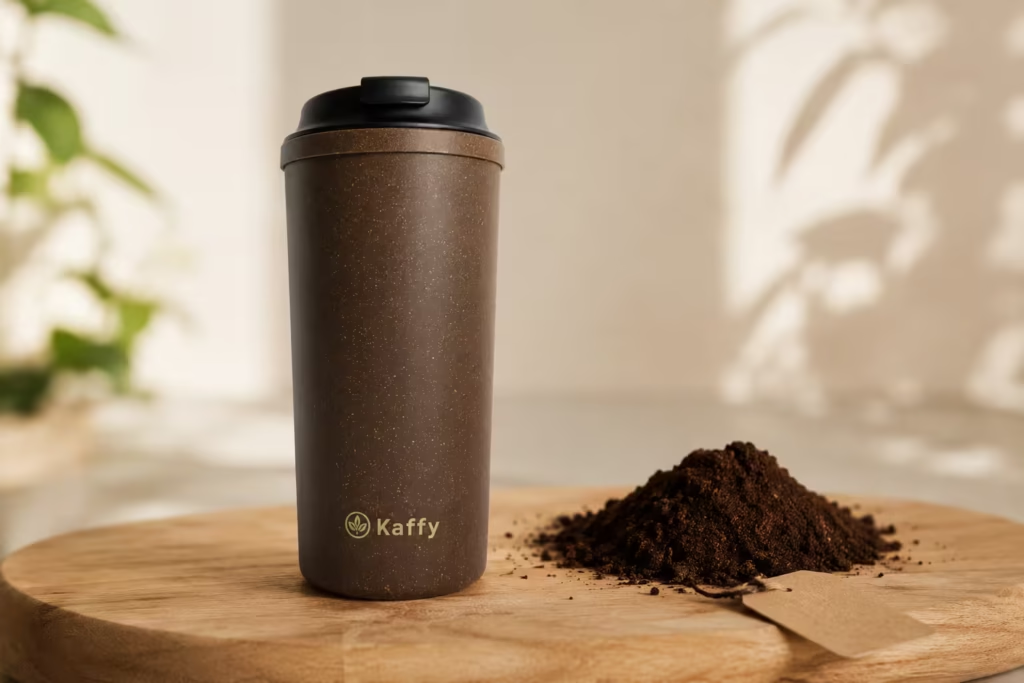
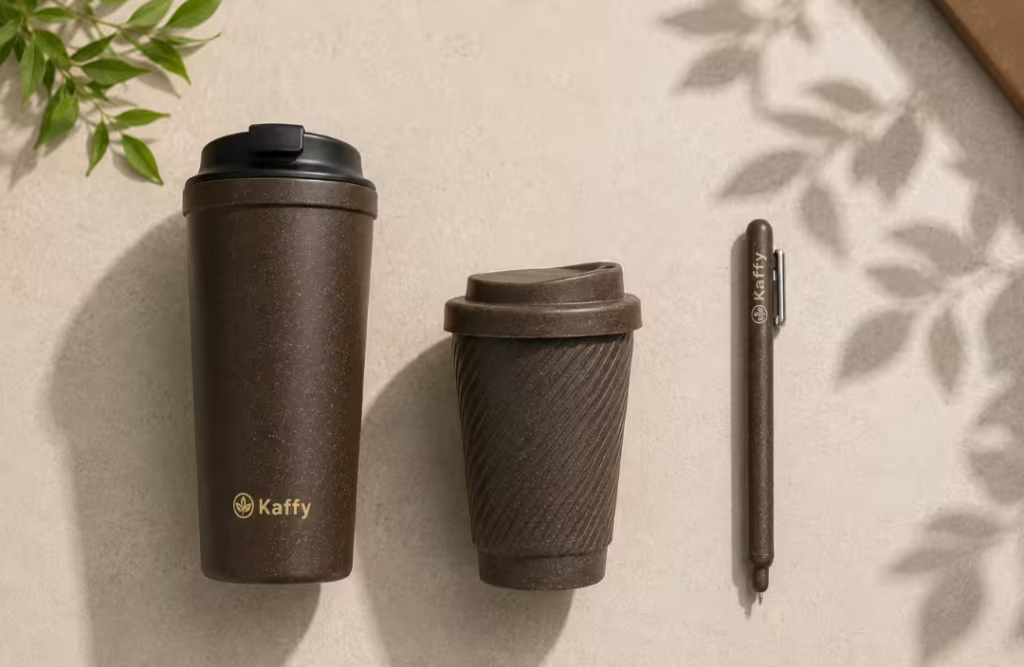
Coffee-grounds biocomposite reads strongly because every layer of the story is verifiable, and aligns with circular-economy principles documented by the Ellen MacArthur Foundation. The grounds are collected weekly from named Malaysian cafés, blended in Petaling Jaya, formed into the tumbler body, and engraved on the same site. Procurement teams asking for eco-friendly corporate gifts Malaysia ESG reviewers will sign off on can point to a single Malaysian address for the full chain.
| Tier | Per-unit RM | Typical eco format |
|---|---|---|
| Mass-volume (1,000+) | RM 25–45 | rPET tote, recycled notebook, simple bamboo pen |
| Mid-tier (500) | RM 60–95 | Engraved coffee-grounds tumbler, recycled stainless flask |
| Premium (under 200) | RM 110–180 | Engraved tumbler + recycled-card sleeve + accessory |
Caption: Indicative per-unit price bands for eco-friendly corporate gifts across Malaysian B2B order tiers in 2026.
Source: Kaffy operational data, Malaysian corporate gift orders, 2024–2026.
Use a tight five-question script. What is the recycled or bio-based input percentage by weight. Where is the production address. What is the expected daily-use lifespan in months. What happens to the gift at end of life. Who supplies the packaging and is it recyclable. A supplier comfortable with the answers in writing usually delivers cleanly — these are the questions UN SDG 12 (Responsible Consumption and Production) would have you ask. A supplier deflecting on any one question is a flag.
Customisation does not break the eco brief if the method is right. Laser engraving leaves no chemical residue, no peel-off layer, and no print waste. Pad printing and screen printing add ink layers that complicate recyclability. For eco-friendly corporate gifts, laser engraving is the cleanest choice and reads well on tumblers, flasks, recycled stainless and biocomposite alike.
The Kaffy Tumbler is built from coffee grounds collected from Malaysian cafés, blended into a food-safe biocomposite body, and engraved on site in Petaling Jaya. Every audit question — input percentage, production address, lifespan, end-of-life route, packaging — has a one-line answer the procurement team can hand the ESG reviewer.
Browse the broader range at Kaffy products and the Kaffy shop. Brand background sits at Kaffy about us, and the team is reachable at Kaffy contact.
For category context, see our pillars on sustainable corporate gifts Malaysia, sustainable drinkware corporate gifts Malaysia, coffee grounds tumbler Malaysia, and ESG corporate gifts Malaysia. Budget guidance lives at corporate gifts Malaysia budget.
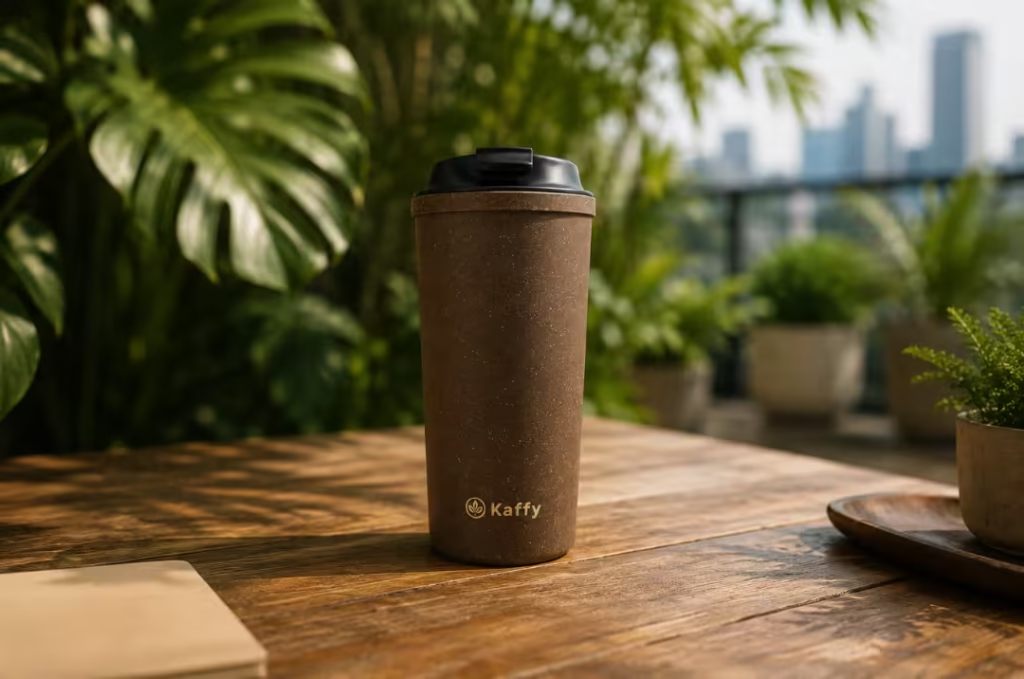
The first mistake is treating “biodegradable” as a clean answer. Most “biodegradable” plastics need industrial composting that does not exist in Malaysian municipal waste streams. The second is buying eco-friendly gifts in single-use plastic film that undoes the story. The third is over-customising — a five-colour print on a recycled tumbler reads as confused.
Gifts with verifiable recycled or bio-based inputs, a known Malaysian or regional production address, a daily-use lifespan over twelve months, and recyclable or compostable packaging.
In 2026 the typical premium over generic gifts is about 10–18% for comparable formats — narrower than two years ago.
It depends on the binder and lifespan. Some perform well; others fail under heat or short use cycles. Always verify binder and expected lifespan in writing.
Laser engraving. It adds no ink layer, no peel-off film, and no chemical residue. Suits tumblers, recycled stainless, and biocomposite.
Material choice is independent of halal sensitivities, but design and engraving messaging should follow standard halal-respectful practice — geometric or botanical motifs, simple Malay greetings.
Kaffy in Petaling Jaya supplies coffee-grounds biocomposite tumblers and recycled-input drinkware with on-site laser engraving and full supplier documentation.
If your team is scoping eco-friendly corporate gifts Malaysia auditors and recipients can both defend, the Kaffy team in Petaling Jaya can help. We supply the Kaffy Tumbler in coffee-grounds biocomposite, with on-site laser engraving, recyclable sleeve packaging, and full supplier documentation. Contact Kaffy for a quote, or message us on WhatsApp for a same-day estimate.